It has been about nine months since I have stepped foot out of the UK and at first it felt a little strange to be on the move. As I tore myself away from the familiarity and comfort of home, which has been the base of my lockdown life, a sense of muted excitement lulled in the air, mixed with a slight reluctance.
It felt like the world had shrunk and that anything beyond my locality was just a little bit scary. It felt like one of those times where it would have been so easy to stay put, so easy to stick with the familiar, so easy to stay at home. I was excited about heading to Crete but not at all thrilled about the journey itself which would take me to public locations where I would have to mix with people in situations that I hadn’t for nine months.
Heading to the airport, I lowered my expectations of what it might be like: check-in, the flight, getting through security, mixing with people, passport control… I imagined long queues, chaos, delays and disorganisation. This mindset was my way to avoid any disheartened disappointment where I knew the world was still figuring out how to deal with often changeable covid-related rules and regulations in public places.
Despite the unsociable early hour of the morning, thankfully we arrived at a relatively quiet airport, which was free from the usual mad rush of passengers starting the school holidays. This gave a promising start. I was hopeful. We immediately joined a not-so-long queue of fellow bleary-eyed passengers, and waited to get our documents checked before heading for a much needed coffee. As the queue shuffled along at a pleasantly steady pace, my spirit was lifted further and I soon realised that the entire airport operation was well organised and prepared. I almost felt guilty for my negativity but I was equally pleased to be proven wrong.
Papers checked, bags dropped, security passed and stomach fuelled, we were aboard the plane within an hour of arriving at Gatwick. And despite my awareness of the close proximity of the passenger in the seat next to me (which felt odd after so much social distancing) the thought that every adult on the plane had had their papers checked and in most cases had been double vaccinated, gave some element of safety.
Landing just a few hours later, I felt the welcoming heat of the Cretan sun and a warm gentle breeze on my face.
As 31st December approaches with EU-UK talks dominating the news, I thought I would share this small anecdote…
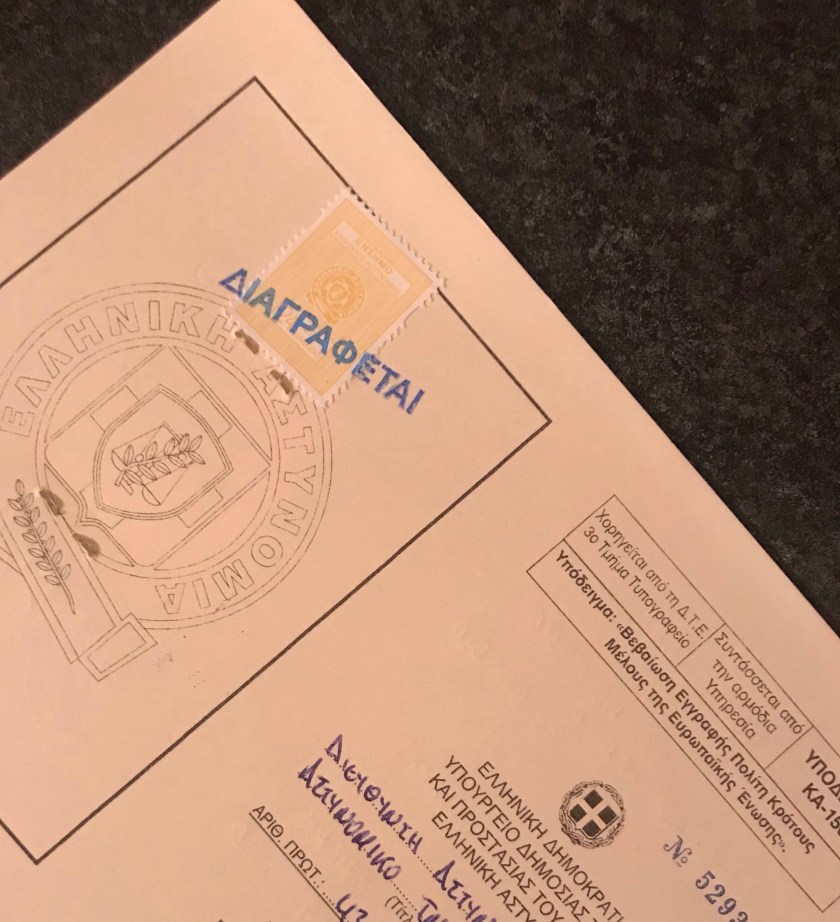
Three months ago, I paid a visit to a Greek police station. It was a beautiful sunny morning and my husband and I had driven to Vryses, a small town in Crete. We were there to collect our Greek residency cards – so not anything illegal, yet I still felt a little nervous and now, upon reflection, I realise why. Not only had I never ever visited a police station before, but I was also dealing with the Greek law enforcement – a complete unknown.
As I write this, I fondly recall my student days in the late 80s when I had two encounters of a very brief and distant kind with the British law: firstly when marching in Central London against the poll tax and secondly when protesting at Earl’s Court meat market with several other like-minded vegetarian individuals. I’m not even sure they can be considered as police encounters but that is as close as I get, so thankfully my contact with the police has been few and far between. And just to be clear, for the record, I have none.
With the uncertainty of Brexit and possible restrictions on time spent in mainland Europe for UK citizens, Greek residency had fast become a popular topic of discussion and so we had decided to pursue the process to at least get us into the system; nothing would be lost from applying. Having uploaded and sent all the necessary paperwork, we had received an email from the police informing us that our cards were ready and that we should visit the station to collect them.
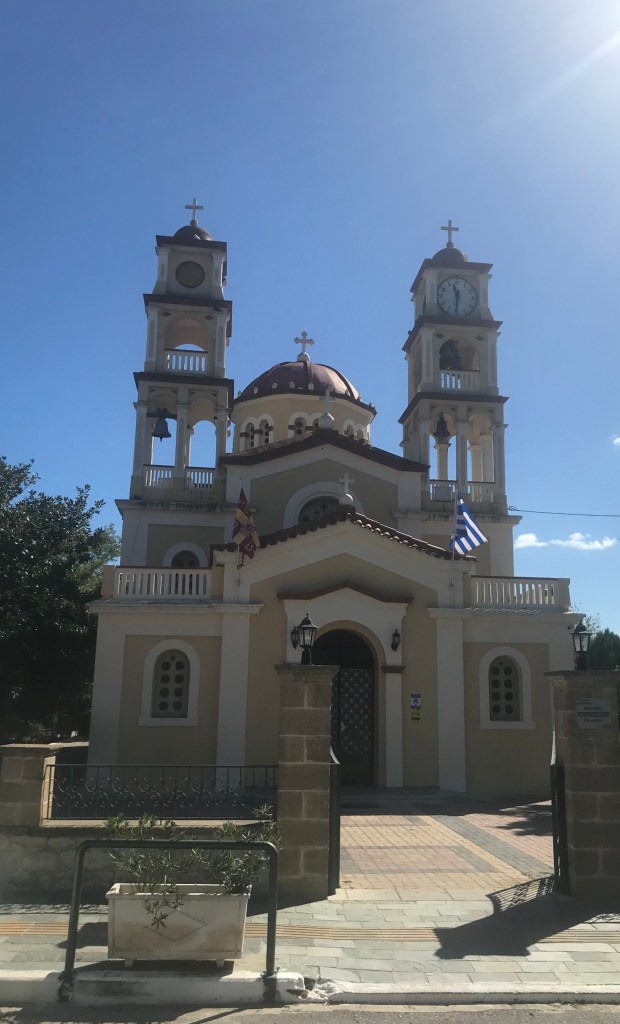
In the heat of mid-morning, it took a few minutes to work out which building was the actual police station. On the right hand side of the road stood a proud church – clean and charming looking as though it had recently received a fresh coat of paint; similarly, the adjacent building – the town hall – was smartly dressed in cream with terracotta highlights.
The church in Vryses
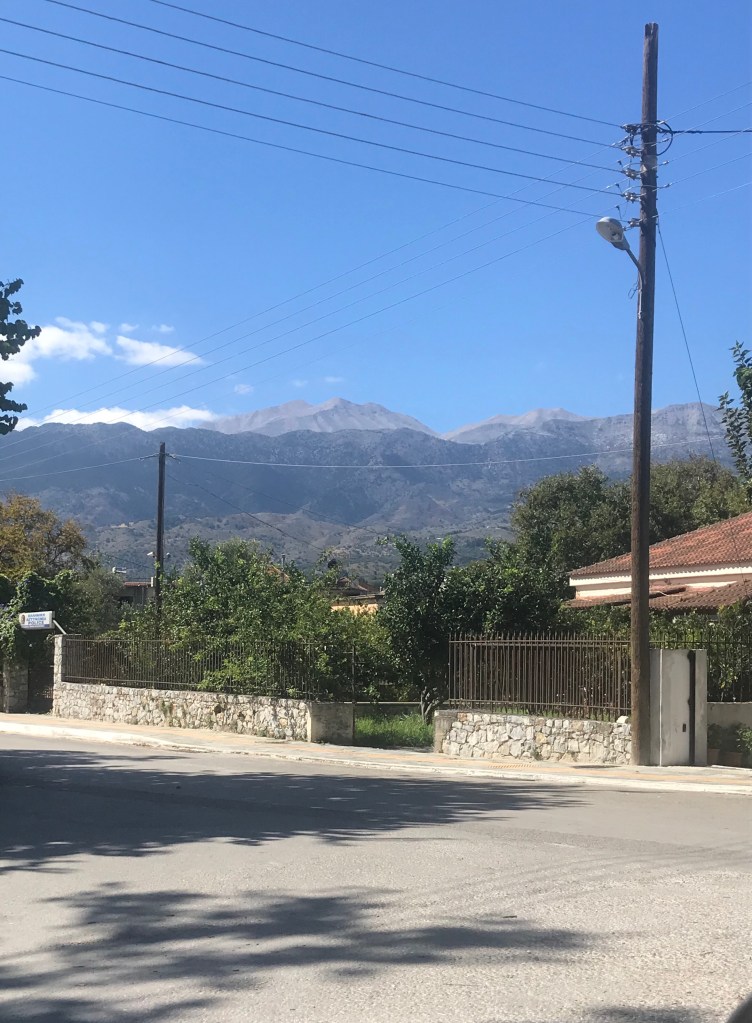
Opposite these two buildings was a slightly different story. An empty concrete shell of a bungalow stood within a bed of overgrown grass which had long since seen a mower. This unkempt green mop extended to a second, yet inhabited bungalow. This, we soon discovered, was the police station, a building that was hardly visible from the road as it was hidden behind a metal railing fence and leafy trees. Despite the neglected grass, the well-established trees growing in front of the station gave the impression of wholesome heartiness with a twist of love where lemons hung from the branches.
Approaching the bungalow, we saw a dark doorway ahead where we could just make out some evidence of life and so that’s where we headed. I cautiously peered into the dark room and hesitantly took a step over the threshold and smiled with a friendly ‘Καλημερα’. A hand shot straight up from the back of the room to indicate that I should go no further. This hand belonged to a balding, bearded, somewhat fierce-looking man with a solid physique who sat behind his desk directly opposite the door. His expression of apparent disdain was in fine tune with his hand gesture. At least, however, he did have the courtesy to acknowledge my existence since the lady sitting at a desk to my immediate right must have been so busy that she hadn’t even seen me.
‘You come back in one hour (slight pause) because I am busy,’ the policeman ordered sharply in a deep throaty guttural – and possibly cigarette fuelled – voice.
I stood for a moment feeling slightly surprised, awkward and indignant. If I’d been in England, I would have politely requested clarification on the specific time that I should return to ensure that I was actually going to be seen; however, given that I was a foreigner here to complete an application for residency with the joys of Brexit looming on the horizon, I certainly wasn’t going to rock the process by being a disgruntled customer. I sensed that my reaction could easily sway the decision of this somewhat formidable looking man; there was no messing with him. After he had spoken these words, I hesitated, looked around and walked meekly away, whilst inwardly fuming at the apparent lack of manners. However now was not the time to raise a complaint about being told to wait an hour. Now was the time to step away with reserved British politeness.
After a short wander around the town with a caffeine stop at a local cafe, we returned to the police station an hour later as instructed. A few random tourists were now hovering outside the office with an air of uncertainty of what to do, where to look or whether to speak. Clearly the power of the man inside had got to us all and clearly this was his allocated hour of doom where he had to deal with a motley crew of vague and bewildered foreigners, who were expecting residency but who hadn’t yet perhaps mastered the Greek language.
With the pecking order established amongst us, I didn’t have to wait too long to approach the doorway, but I was very quickly stopped again with a hand gesture, this time by a younger policeman who said that no one should enter the office. Perhaps he had been called as back up?
This time, the balding man (who had forgotten to say hello the first time) had transformed into the jolly, friendly giant; he completed our application and issued our residency cards with unexpected ease and efficiency. My nerves had been causing a riot inside as I hoped he wouldn’t notice that the four passport photos, which we had had to submit, didn’t match. Of course he noticed but it didn’t matter, he only needed three photos after all. Perhaps his initial brusque attitude and the strict instructions for the application were a clever ploy to set the fear of something among us?
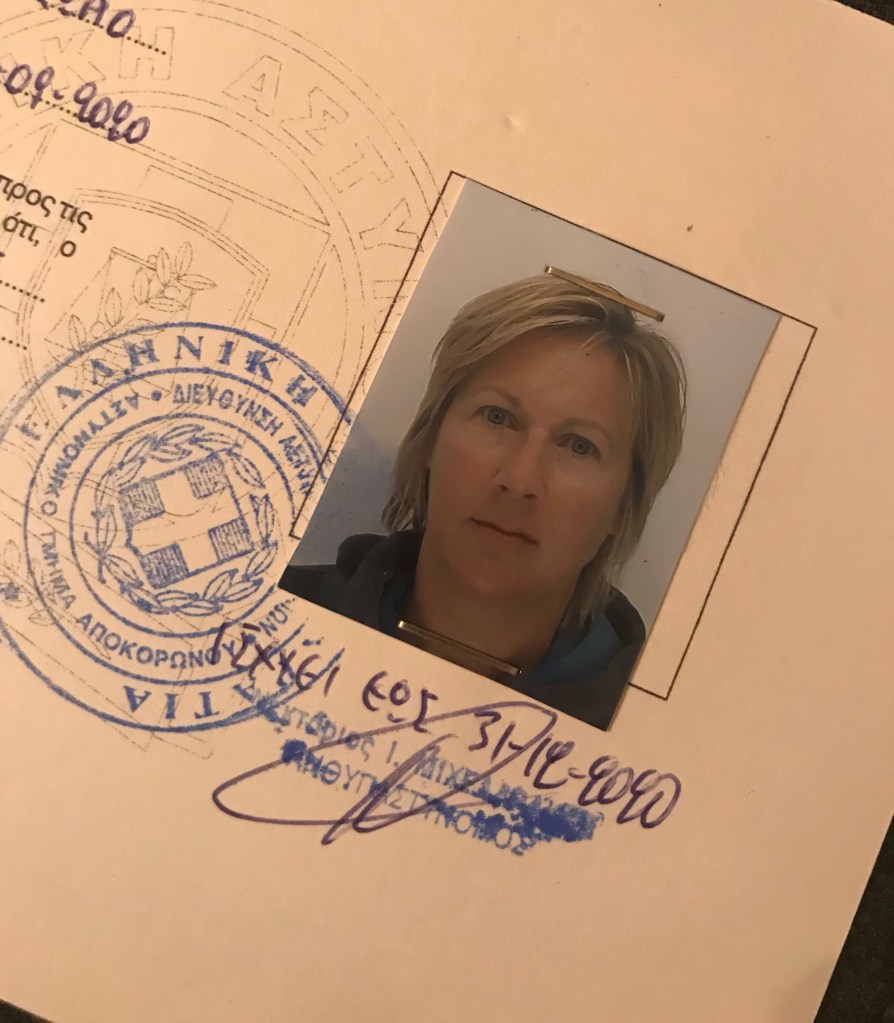
Handing us our residency cards, I noted, as expected, that they were dated until 31 December 2020. We knew that this was the case from other people who had already applied (and given that the Brexit deal/no deal was still without conclusion), but I felt compelled to risk asking why they were stamped only until the end of this year. The reply from my new law enforcement friend was a deep loud smiling guffaw, ‘Will you still be alive after that? Fingers crossed, see if we are all alive then!’
Head held high and clutching the freshly stamped residency cards, my optimism refused to dwell on his parting words of an uncertain future and I left with a smile of success.
I have always been interested in language and communication, whether it is the origins of words; how children learn to speak and read; learning different languages or how to speak to someone using sign language.
Although I am not multi-lingual like some people I know (and I am in awe of the way they confidently flit between languages), my interest in words and communication led me to focus on languages throughout my education. I think it began when as a family we spent time living in Rome; I was a young child (at primary school) and had friends of different nationalities.
Here, I could also drop in a small mention of my wonderful Swedish grandmother who gave my family a Scandinavian side which perhaps also incited my interest in different cultures and languages. So it is with this smorgasbord of knowledge and experience that I write about my next linguistic adventure…
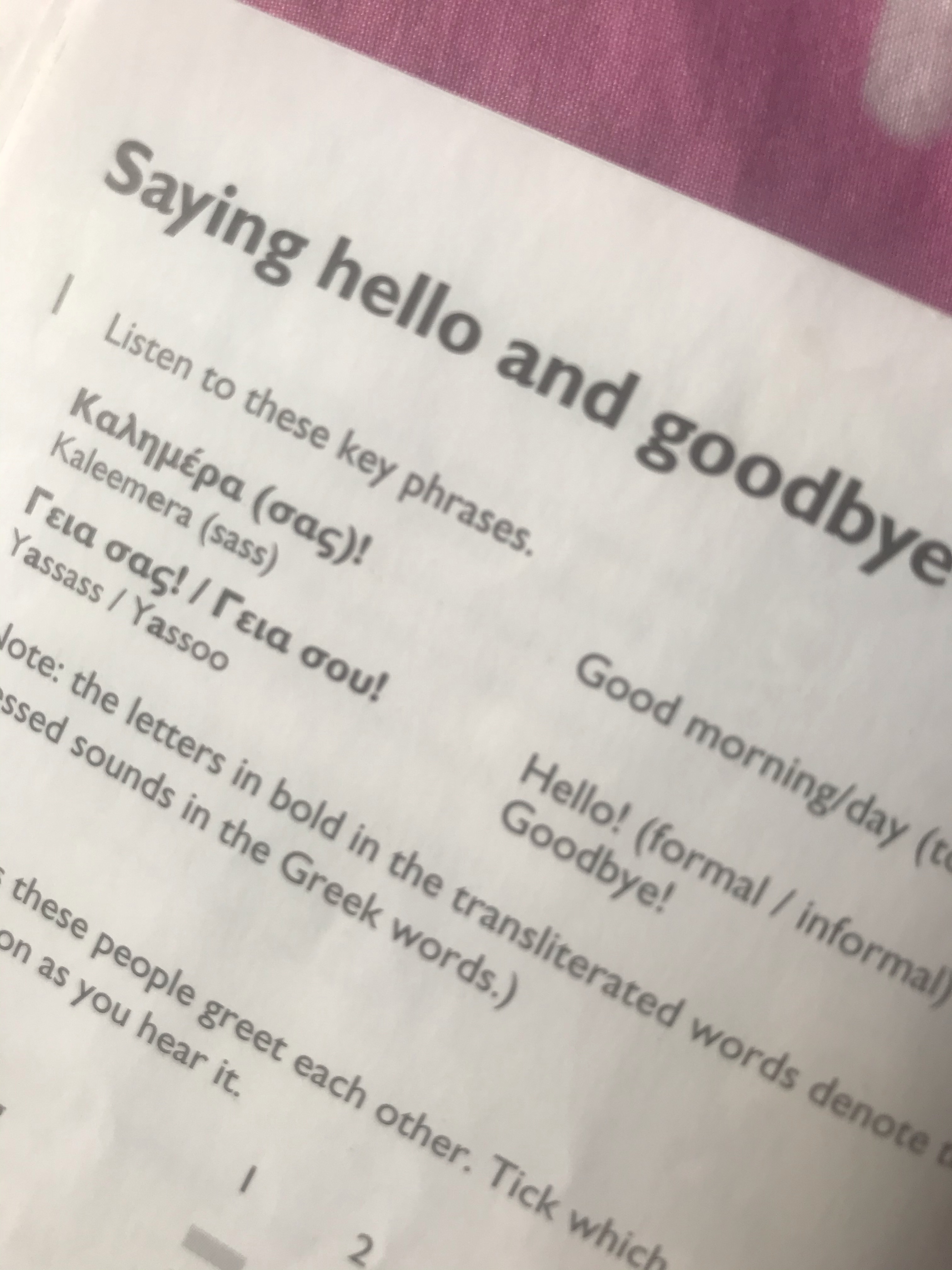
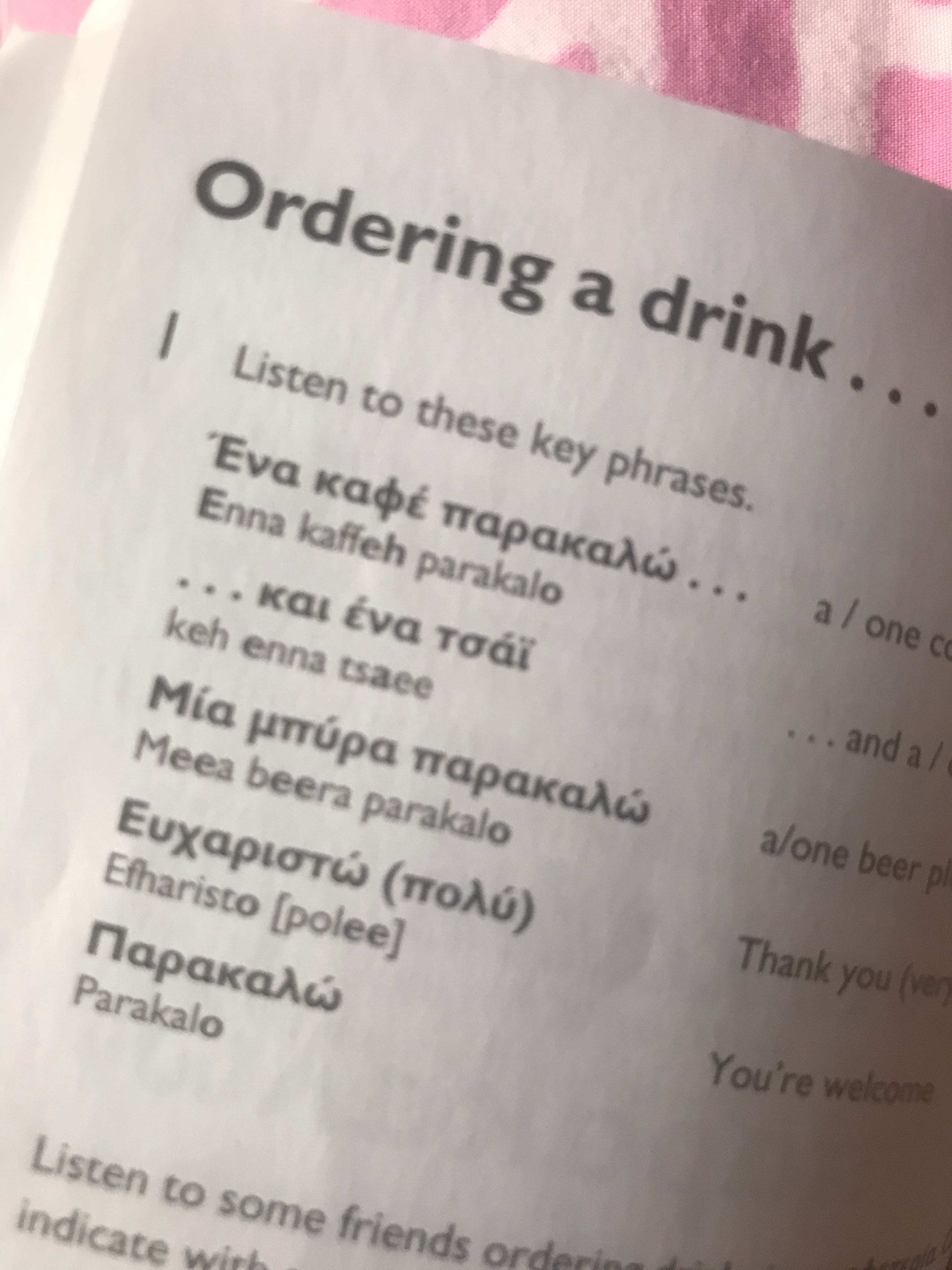
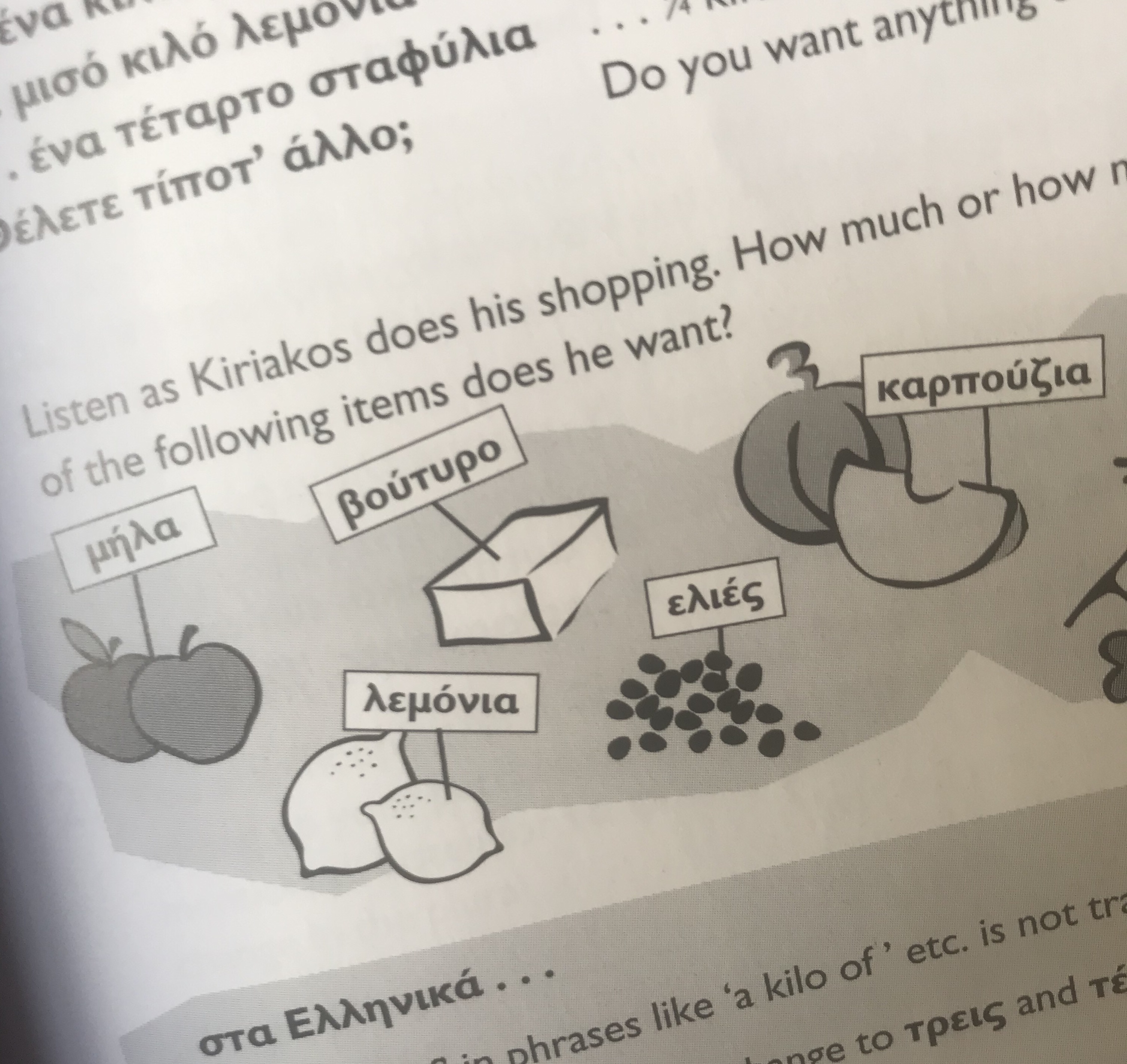
I have been visiting Crete for the last sixteen years and I have shamefully never got to grips with the language. The distinct Greek alphabet was giving me much grief and it became far more of an uphill slog compared to when I had learnt Spanish or French. Struggling over the years in a half-hearted attempt, I have dabbled with books telling me how to survive on holiday with beginner’s Greek as well as sporadically listening to a Greek language CD in the car: a pitiful attempt to learn key phrases at the same time as driving somewhere.
Holiday Greek!
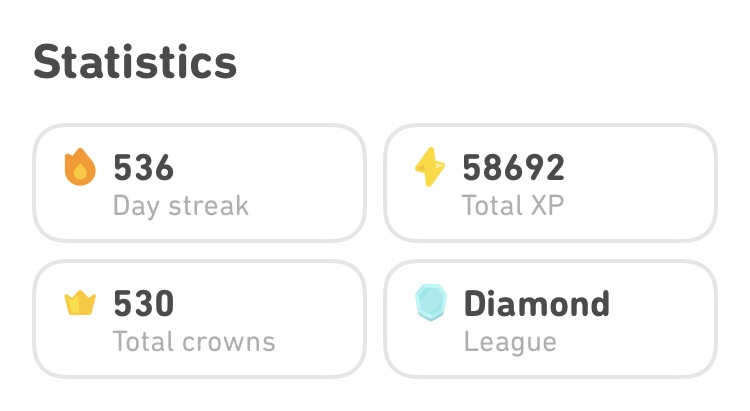
Soon, I realised I needed to do more and so last year, I began a more dedicated approach to learning Greek. I had heard of the popularity of the Duolingo app and so I decided to try it. I made a commitment to myself that I would do a little each and every day and make necessary notes to help embed my learning. Now, for about a year and a half – 536 days to be precise – I have stuck religiously to my daily lessons.
My Duolingo streak
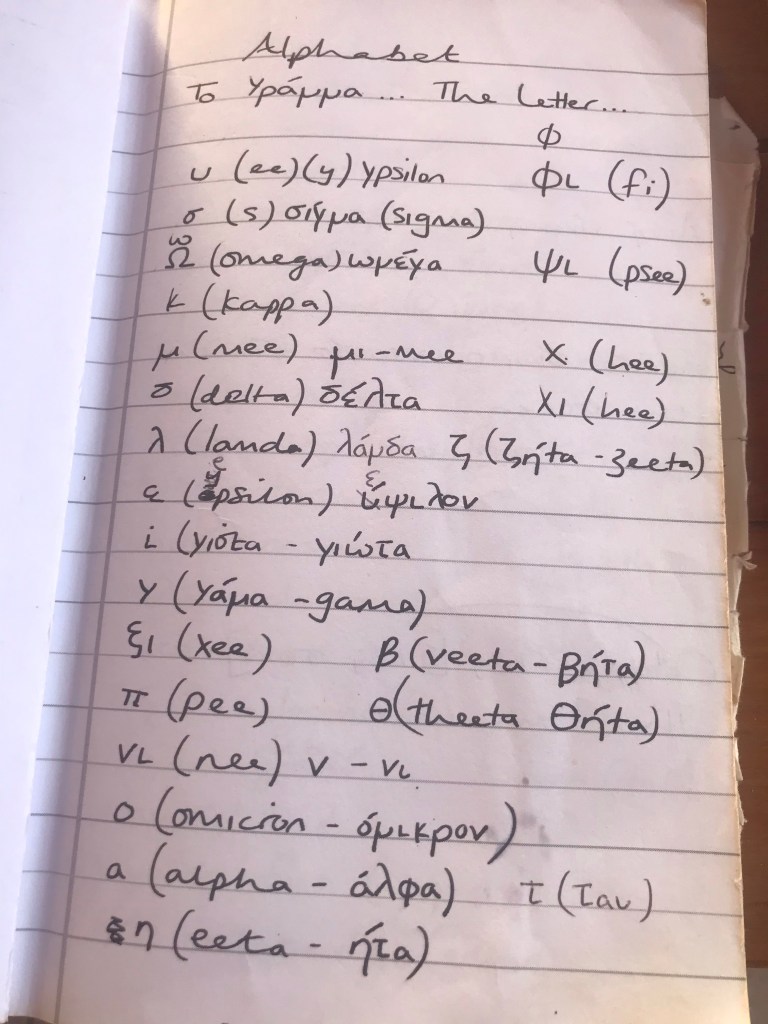
I knew I had to get my head around the Greek alphabet which I hadn’t done properly before so I made sure that I spent as long as I needed on the very first α, β, γ section in order to embed the basics before moving on. This was obvious, sensible and successful as it gave me the necessary solid grounding for each subsequent unit of work.
My very first page of notes (536 days ago)
During my 536 days of Duolingo, whenever I was in Crete, I was gradually introducing more words into my verbal communication with locals but I soon found that I wasn’t progressing sufficiently to string necessary sentences together in conversation with any acceptable confidence or fluency.
So it is now that I am about to embark on my first group lesson at a local language centre in Armenoi, Crete. And I cannot lie – I am filled with a mix of fear and worry, but also excitement.
Despite being a teacher myself for thirteen years and familiar with the classroom environment, it is a whole different story when you, an adult, are back in class as a student. Now, on the eve of my first ‘official’ lesson, I find myself contemplating insignificant issues such as what to wear; I know that this is really to take my mind off the idea that I am going into a classroom of the, as yet, unknown. I feel like I have been tackling Greek for such a long time and I so desperately want these lessons to be successful and to be the gateway to a reasonable level of fluency.
I hope that the lesson is not too difficult where I sink out of my depth and lose any faith in my language skills. At the same time, I hope that it is not too easy to lead me to feel demoralised that I am not learning or having that conversational practice that I so desperately want, need and seek.
As well as learning Greek, I want to have fun, meet different people and enjoy a new experience on an island that I have been visiting for years so I know I can only gain from these lessons. If I am to progress in this unique language, I have to take the plunge and overcome any nerves.
Pondering further, I cast my mind to the mental preparation that I apply prior to dentist visits, visits which I fear above all fears.
I listen to meditation music to calm my mind.
I mentally project myself forwards to the hour or so beyond the appointment when it is all over.
I clean my teeth thoroughly.
I picture myself walking into the classroom with fresh breath, humming a tranquil tune and contemplating a well-deserved post-lesson lunch. In addition to these ‘dentist’ strategies, I also decide to apply advice that I would give to someone else and which others have given to me – There is no point worrying about something bad that hasn’t happened or may never happen.
Everyone understands the severity of this virus and the majority of people agree that measures imposed to restrict the spread are vital, but today reinforced my view that we also do need to apply some common sense.
Here in Crete, the current rule states, ‘Mandatory use of face masks in indoor and outdoor public spaces.’ Earlier, as I was about to embark on a run, this ruling raised some interesting discussion in our household. Mask or no mask?
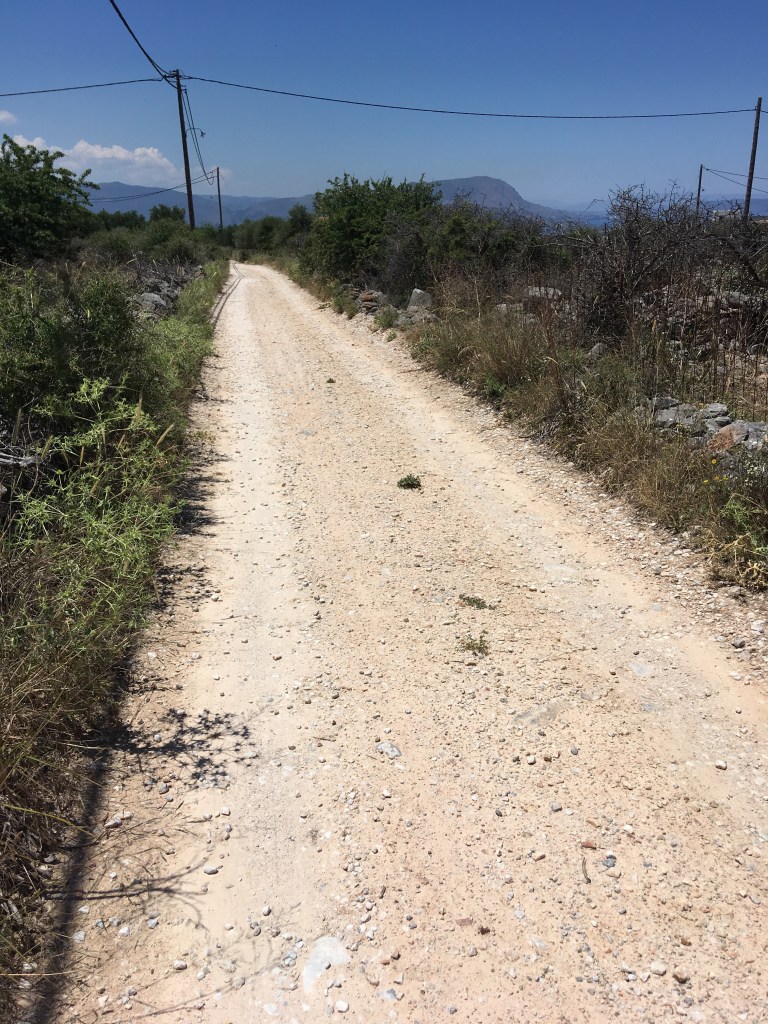
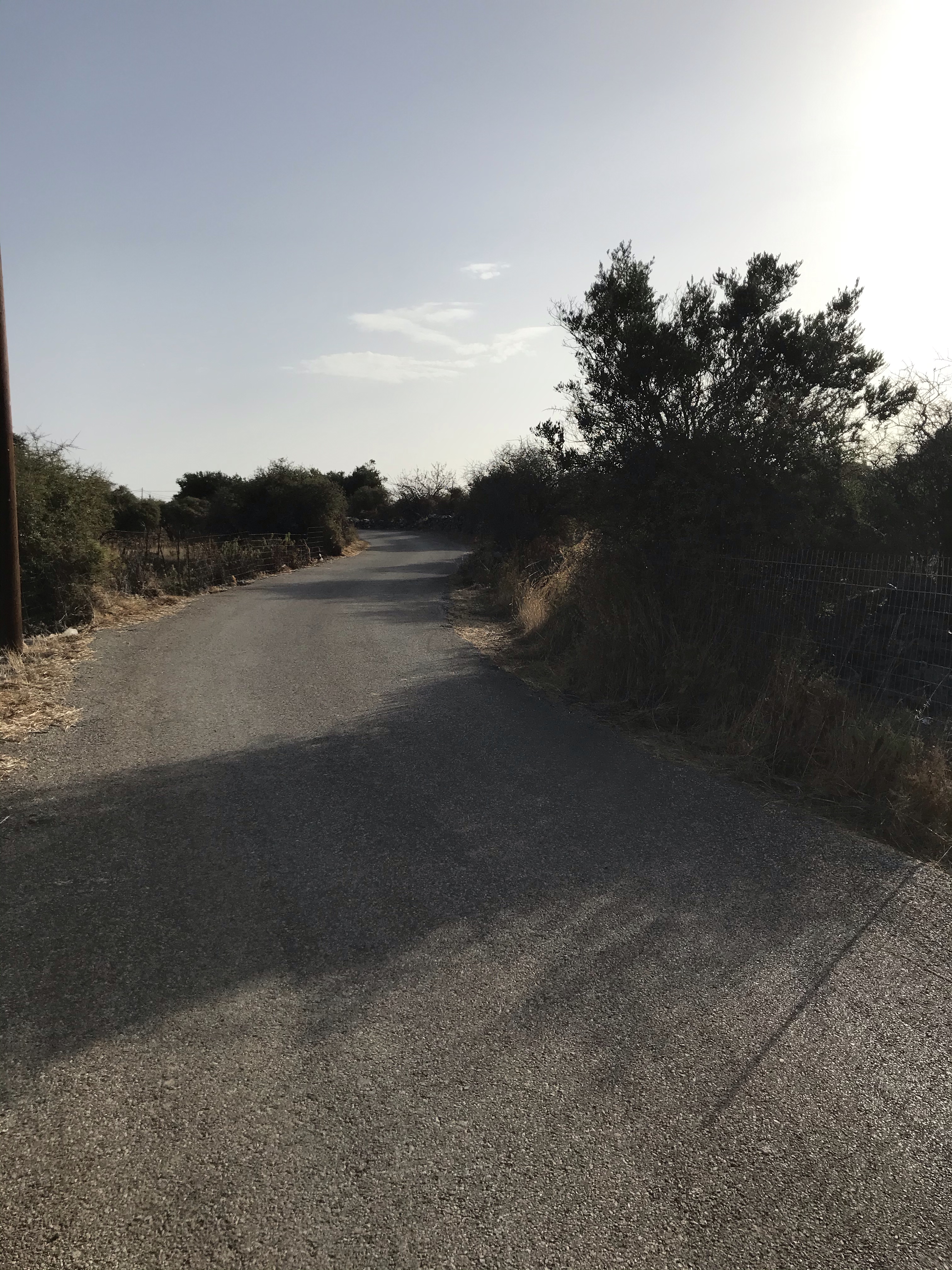
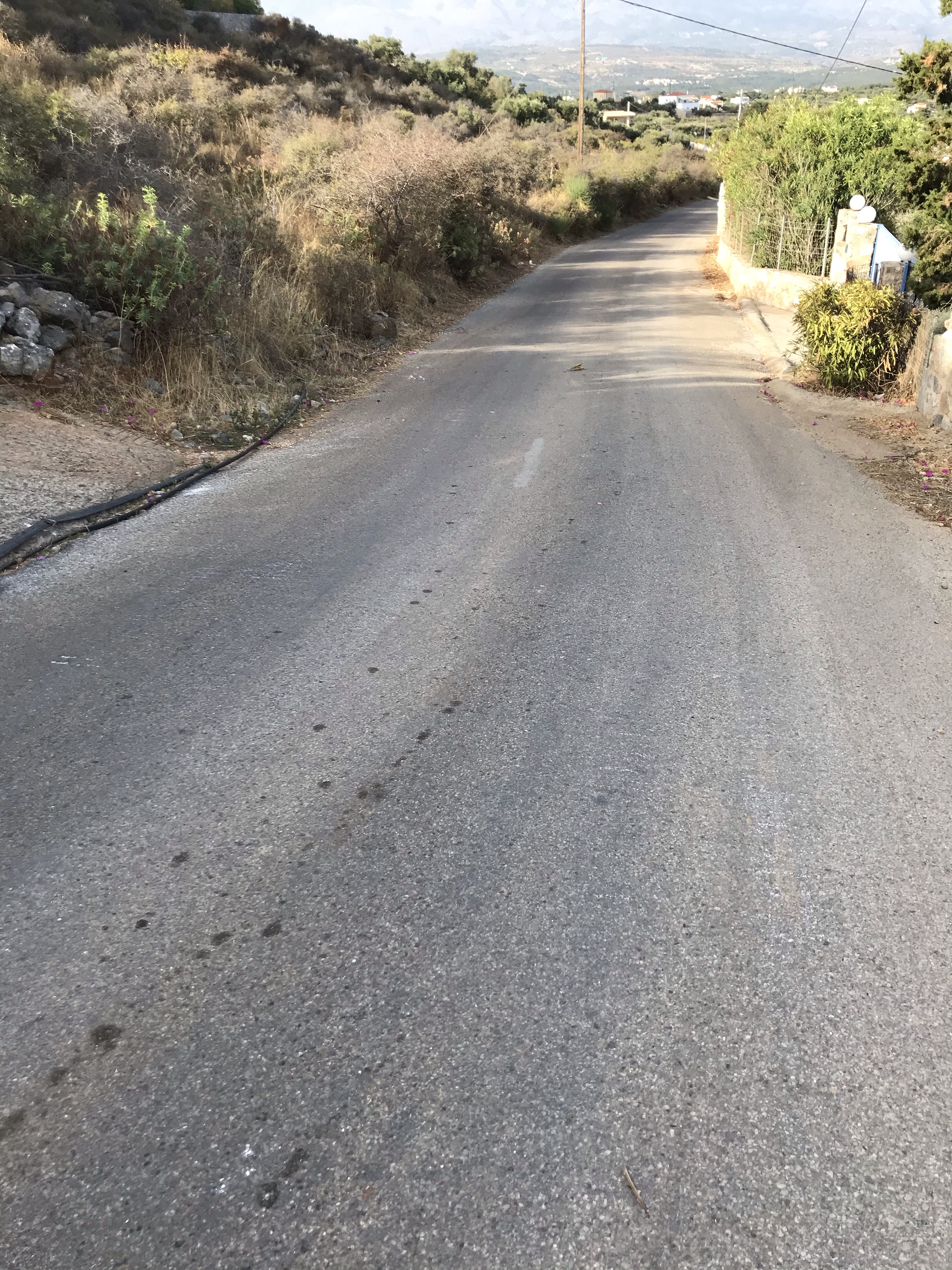
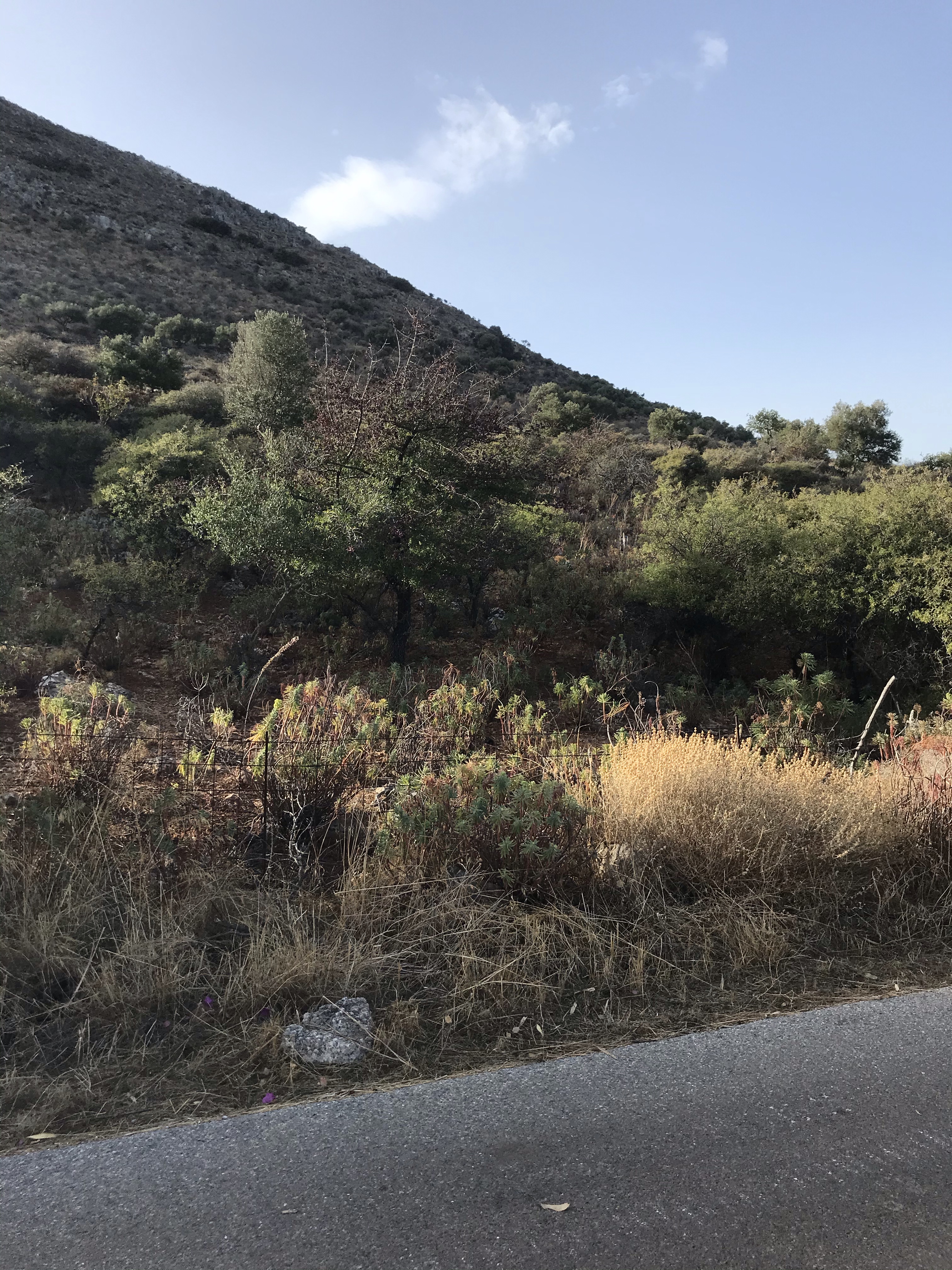
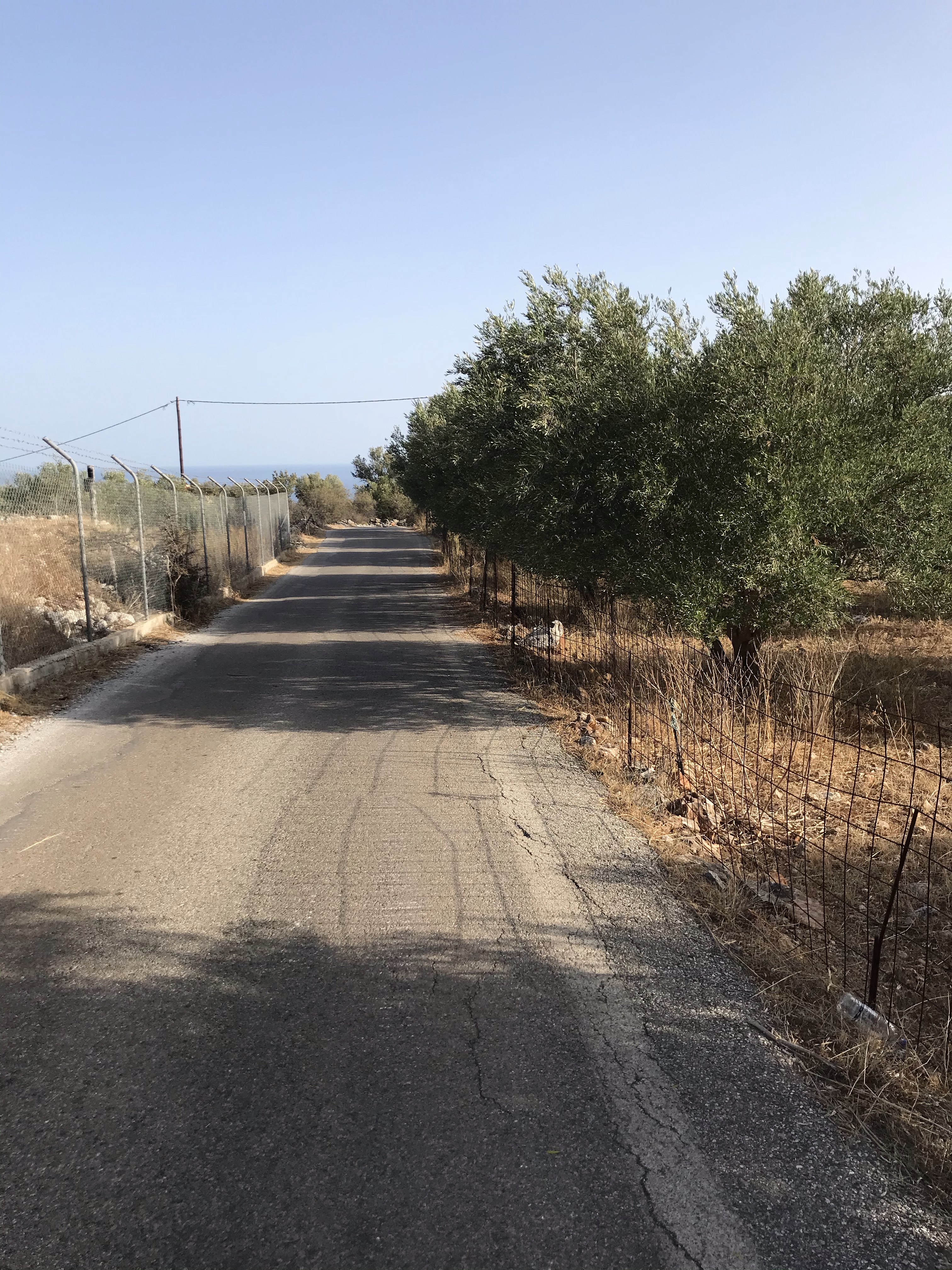
Picture the location: I was up a fairly remote mountainside, with the exception of a smattering of houses – some occupied, others not. The landscape is largely untouched, where proud olive trees stand collectively in the fields, fields which are separated by low walls made up of precarious piles of stones. The bell tinkering of the sheep, who roam daily in a nearby field at sunrise and sunset, had silenced. The lonesome farmer had already moved them on. Looking around across the expanse of the land, I saw no one. It was here, on this mountainside, that I would begin my run. First along a deserted dirt track and then on a trail that would lead me down the hill – down a quiet tarmac road which sees very little action.
Starting track
My initial thoughts were how could I possibly run with my nose and mouth covered with a mask – the temperature was already in the mid 20s and a full sun was shining. However, as I pondered further, I realised that if I didn’t, strictly speaking I would be breaking the ruling. I mulled over what I perceived to be the madness of running in a mask; the idea of exercising and thus breathing heavily whilst constricted by a fabric covering didn’t sit well in my mind. And yet, to fully comply with the ruling, anyone out in public should wear a mask. Surely this is where common sense had to come in?
The CDC (Centre for Disease Control and Prevention) states that ‘masks are recommended as a simple barrier to help prevent respiratory droplets from traveling into the air and onto other people’. As we all know, Covid-19 spreads mainly among people who are in close contact with one another (about 6 feet or 1.83 metres to be precise) and the importance of mask wearing where people are close to each other is clearly understood.The chances of me coming in close contact with anyone on this run was next to none. In fact, not next to none, it was none. If I was to meet another soul walking or running then we could easily maintain the distance of the road width (approx 3-4 metres) should we happen to pass each other.
The empty road to somewhere
I pondered further on the ruling versus common sense. After about 2 km, I would have to pass through a tiny village (with one small local convenience store and a taverna) and then a second village, which although larger, would still be fairly empty due to the early hour. Continuing downhill, I would eventually reach the quiet sea resort of Almyrida, which sits nestled in a gentle and quieter-than-normal bay. Here I would end my run. Here I would mingle with the somewhat despondent local employee in a cafe who, if his establishment was lucky enough to be selected, would be tending to the odd tourist seeking breakfast. August had ended, holiday makers had left – or not even arrived, the place was quiet.
Almyrida
After much thought, I decided to carry my mask as I ran. That way, should I meet anyone along the way, I could easily put it on at a safe distance before we crossed paths. I decided that I would wear the mask when going through the villages, but not along the deserted road. And so finally I set off.
For the first kilometre, despite not meeting a soul, I felt an element of guilt. I almost expected a police officer to stroll out from behind a prickly pear cactus as if waiting to catch me! Just before reaching the first village, I did actually pass an older lady who was strolling up the hill on the opposite side of the road. For the record, she wore no mask. This made me feel a little easier; I wasn’t the only one who was applying some common sense in our remote surroundings. In fact, she was the only pedestrian I passed for the entire five kilometre route. It was that remote.
The prickly pear patrol
As I reached the second larger village, I stuck to my decision and slowed to a masked walk. The tavernas had not yet opened and the local store was empty so other than a couple of cats, I was the only life form on the road. I suspect that many would consider me a touch over cautious; others perhaps not. Once through the village, I unmasked (keeping it close to hand) and continued down the twists and turns of the silent tarmac, yet still on the lookout just in case my sweaty undressed face met another. Soon, however, I arrived at the beach, masked up and headed for a well earned breakfast. Whilst contemplating my journey down the mountain, I released a final sigh of leftover guilt mixed with a feeling of ridiculousness at my worry of breaking a rule which was based on close human contact of which I had none.
On the home straight
Upon returning to the house, I googled a little further and was pleased to find that the CDC have a section entitled, ‘Feasibility and Adaptations’ which suggests that mask wearing is not always possible in all situations. It mentions running and suggests, ‘…conducting the activity in a location with greater ventilation and air exchange (for instance, outdoors versus indoors) and where it is possible to maintain physical distance from others.’ So after my initial concerns, my subsequent research and the sight of another lonesome maskless runner later in the day, I am content with my decision to be a law abiding citizen whilst applying an element of common sense.
We had just finished a delicious meal of beautifully prepared traditional Greek food at a gorgeous taverna located in the heart of a small, peaceful village.
Set slightly to the edge of the taverna was a table with four chairs, where three local men were each enjoying a cold Greek coffee frappe and a cigarette or two or three…The fourth seat was occupied by the waiter (also the taverna owner) who joined his friends for a chat, a drink and a smoke in-between serving customers.
At intermittent stages over the course of the evening, a bell was rung in the kitchen. This prompted a delayed reaction from the waiter/owner where he would slowly rise from his seat, stroll inside, collect the food, serve the customer and then return to his position at the table with his friends to resume the conversation.
Don’t get me wrong, he did an excellent job in his role as front of the house. He was friendly, helpful and attentive and his relaxed demeanour was welcomed with a casual, homely approach that was perfect in this local family taverna.
As our meal came to an end, I pondered on what was going on in the kitchen. In the relentless heat of 30+ degree temperatures, juggling the timing of all the orders, the women were cooking the starters and main courses. Earlier in the day, the women had no doubt prepped vast quantities of vegetables, including countless tomatoes, cucumbers, onions, aubergines and courgettes for the array of mezze dishes. In advance of service, the women would probably have spent hours baking moussaka, boureki and pasticio. And we haven’t yet even considered dessert production. I was exhausted just thinking about the late evening hours that would be spent washing up and cleaning in preparation to begin the whole process again the following day. Factor in bringing up children – that’s a handful.
‘Who is paying?’ asked the waiter/owner as he brought the bill over to our table. Standing patiently beside the table waiting for our answer, he wore a slightly dishevelled look as if he’d just got up from a relaxed afternoon in front of the TV and had been disturbed by the doorbell.
‘He is,’ I replied indicating to my husband, who happened to have the cash in his wallet having been to the ATM earlier in the day. Another meal, it might be have been me paying: a joint account and together 30 years, it makes little difference who puts the money down at the end of a meal. On this particular evening, it was my husband who happened to have the cash.
In response to my answer, the waiter replied, ‘Ah, it’s always the man. The man, he always pay.’ Musing on the implication of his remark, I smiled outwardly in polite passive agreement, whilst inwardly chuckling at what I perceived to be the irony of his comment. He may have had to momentarily vacate his seat at the table with his friends but there was a hidden hive of activity in the kitchen. 😉
I wrote this blog a few weeks ago when we were still in lockdown, but then I lost the inclination and zest to polish and post it. However some recent kind words from someone have encouraged me to rethink and to revive the blogging. Also a warm thank you to Ben Case, a local photographer who thankfully said, ‘yes’ when I asked if I could use his photos in this blog.
So here goes…
Spending several weeks in lockdown gave people many unexpected, yet hopefully fortuitous hours to enjoy their immediate surroundings. With the government prescription of initially one daily and then limitless exercise in open spaces, there was no excuse to not get out and about. Whether a breathless run or a leisurely walk, even the less active and less inclined may have been tempted by the early gentle nudge of encouragement from the PM. In reality, it couldn’t have been a more opportune time to reap the benefits of the local environment. And so, for me, this is my attempt to share my appreciation of the area around me.
River Arun
Living on the South coast is – in my humble opinion – a fabulous place to live, but in particular (and I’m sure that my fellow beach-dwellers will wholeheartedly agree) it has been an absolute blessing to reside beside the sea during lockdown. Whatever the weather and whatever the interest, the vast and seemingly endless landscape of water, pebbles, shells and sand offer space for a feast of sea-based activities as well as land-based lazy leisure. Often, just staring out across the sea to the horizon and listening to the waves was enough to escape the confines of the Covid19 situation.
For me, running became one of my ‘things’ during lockdown: it allowed me to travel a reasonable distance from home, gave a sense of routine as well as time and space to unconsciously dwell on mindless thoughts. For the first three months of lockdown, I had swapped my usual running path to pace the more secluded roads of East Preston, where the winding peaceful tree-lined lanes made socially-distanced running easier with less side-stepping to avoid others. However as lockdown gradually eased, I returned to my pre-virus running route – a circuit that takes me up to the coastal town of Littlehampton – through its streets, along the river and down the length of the sea front promenade.
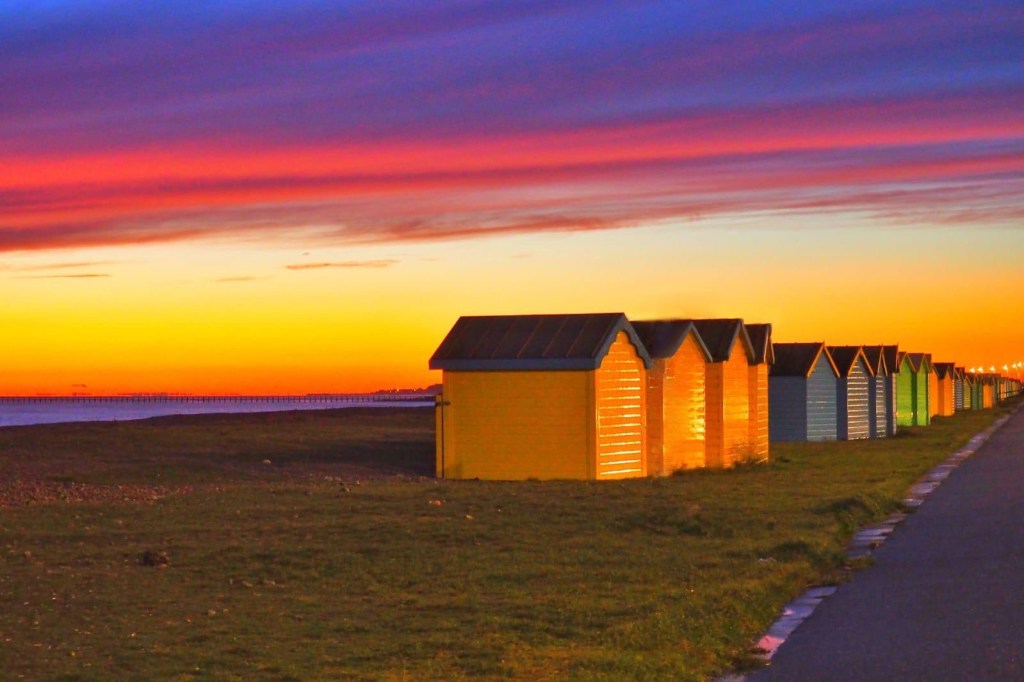
Beach huts line Littlehampton prom
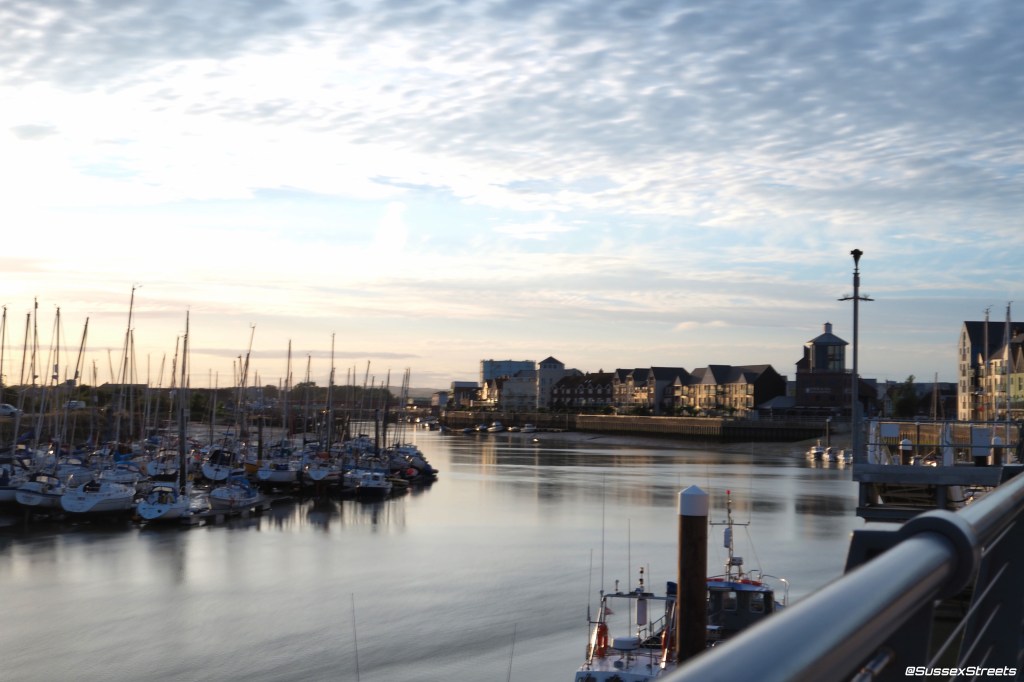
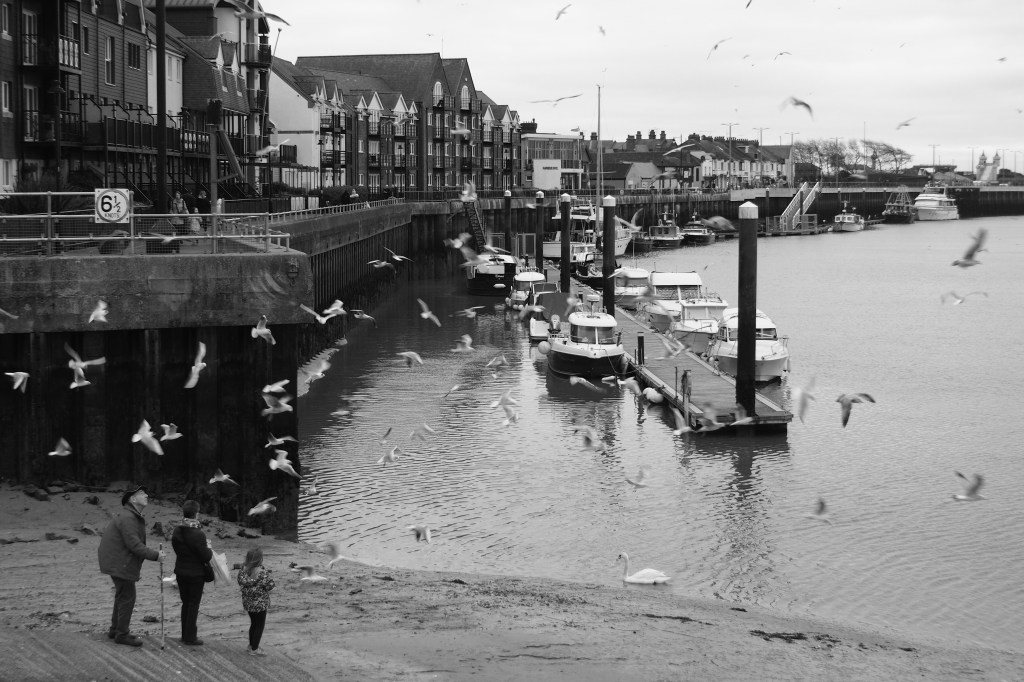
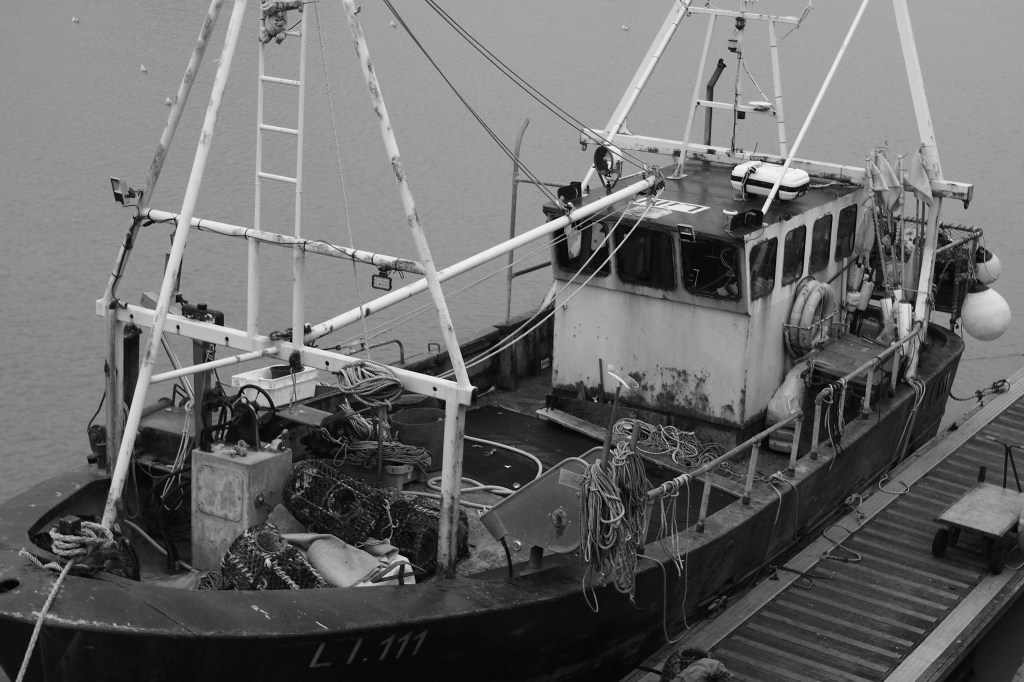
On my first revisit to this familiar course, I was filled with a warm feeling of contentment. It was early in the morning and a wonderful sense of peace hung in the air, where the world was waking up and preparing for the day. After weaving through a few inland streets towards Littlehampton, I paced (albeit slowly!) along Pier Road, which runs parallel to the River Arun. The area around here is always a delight. Boats literally do bob on the water moored up against the wooden boardwalk; attractive riverside apartments line the water’s edge and swans glide along with the current, seemingly without a care in the world. Occasionally, they swagger up the slipway and you have to mind not to get too close, but today they happily ignored me.
Along the raised riverside walkway, the local fishmongery was preparing for business. I was there at the right time of the morning to see crates of sea-life being hawled up and safely placed on wide beds of crushed ice ready for customers.
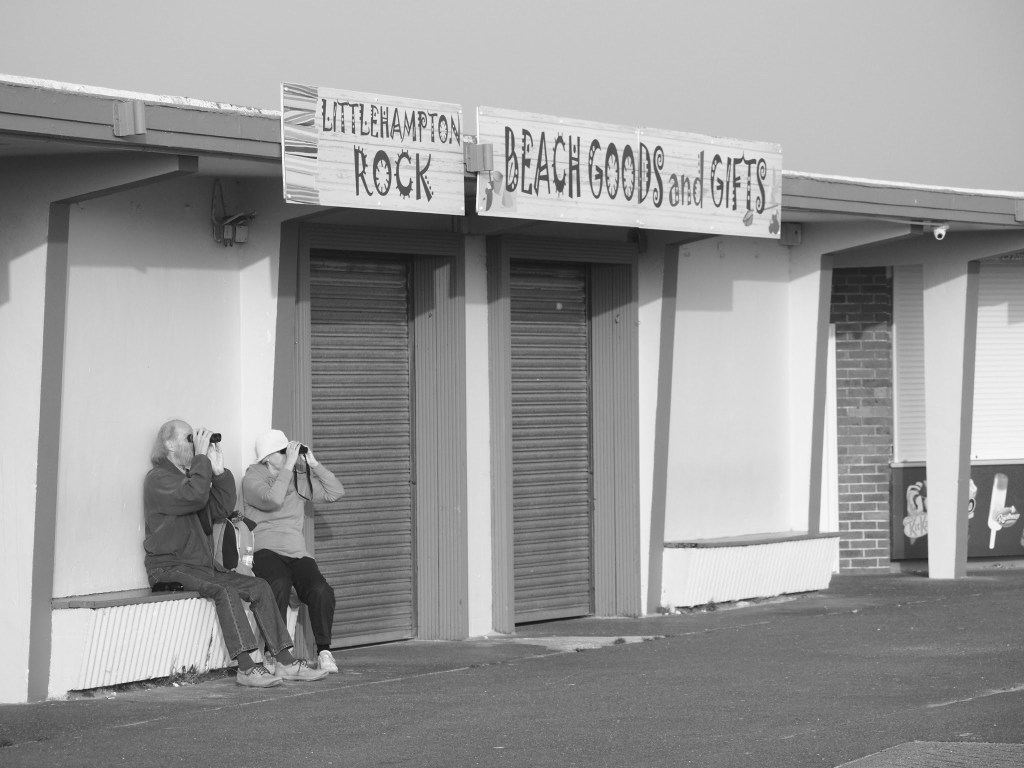
Whether you enjoy eating fish or not, standing on Pier Road with a backdrop of traditional chippies, smelling the aroma of perfectly cooked British chips smothered in salt and vinegar, eyeing the shops selling ice-creams, sticks of rock and other beach nik-naks, and hearing the squawks of seagulls with the sun shining down from a distance, I challenge you to not feel a positive glow of coastal loveliness. Add in the sight of locals sauntering up to purchase a recent catch from this local fish stall for their next meal – it is undeniably a pleasurable sight.
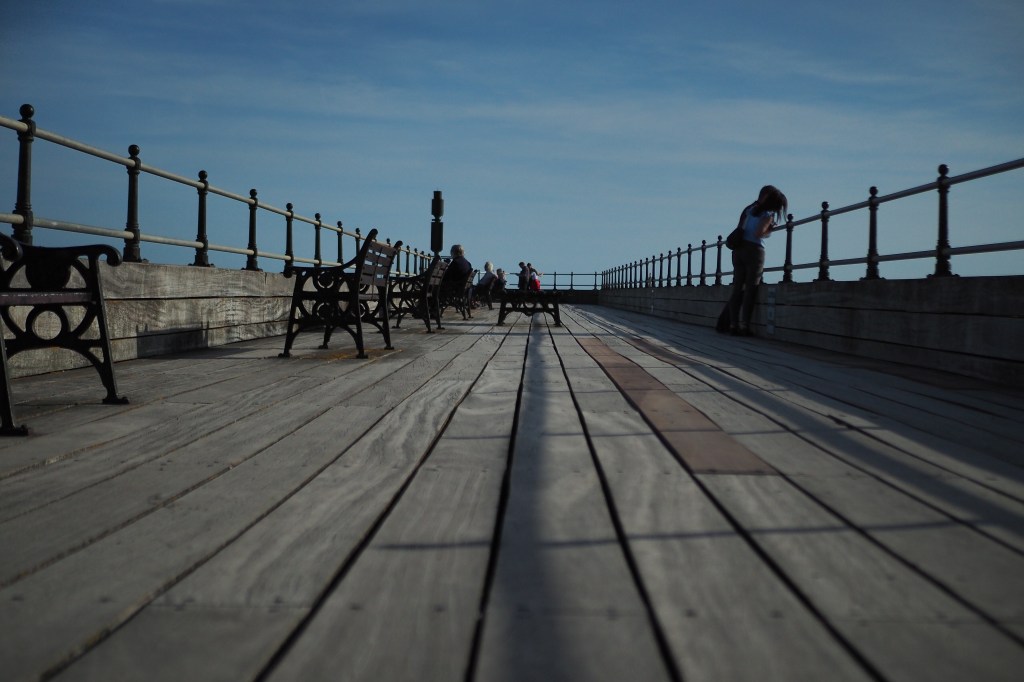
Littlehampton Pier
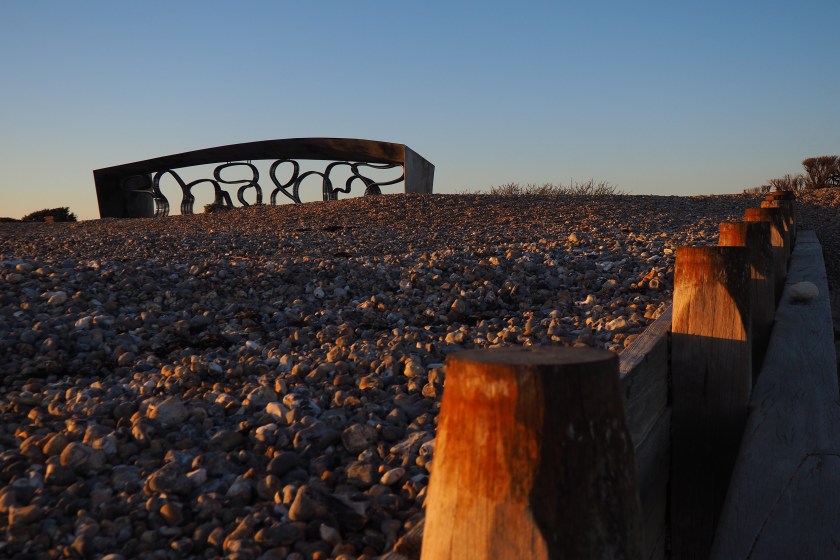
Bypassing the short wooden pier which divides the river from the sea, I turned eastwards and continued along the prom. In recent years, this area of Littlehampton has been tidied up, which has been much welcomed by locals. Nearby, paint pots in hand, local Arun Council workers were sprucing up the Stage by the Sea – a relatively new addition to the town.
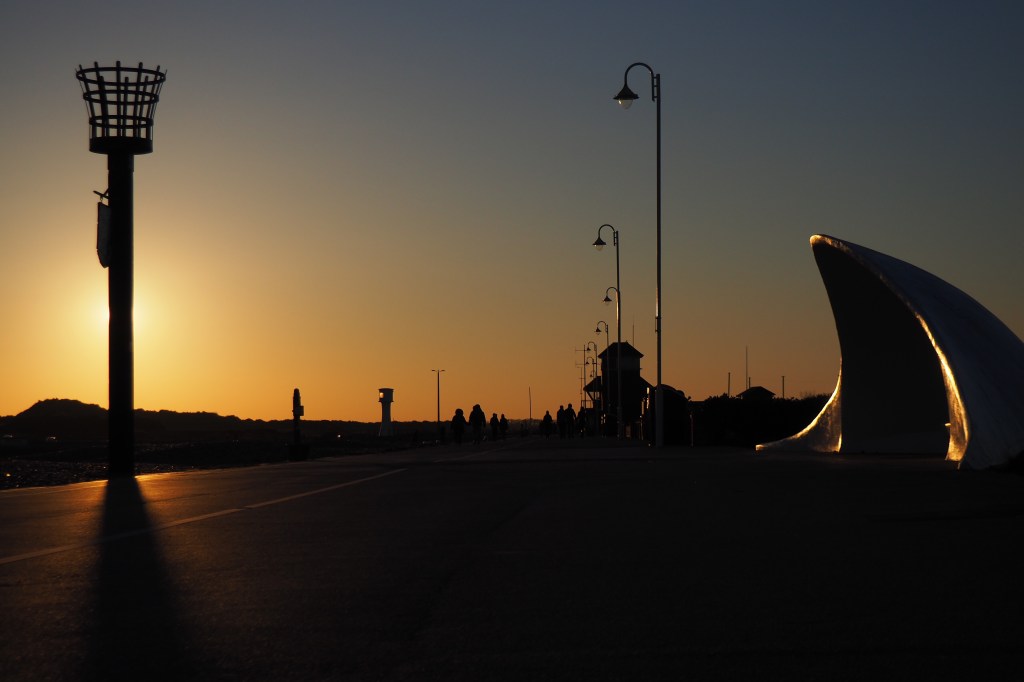
Stage by the Sea
This shell-shaped structure offers a unique performance area where it has been designed to project the sound out as well as complement the landscape of the nearby sand dunes at West Beach. Today, equipment and trucks had been safely positioned with the immediate area cordoned off in consideration of the safety of the public as the workforce quietly persevered with the task in hand. This was a stark contrast to the negative images of jam-packed beaches which had recently filled the newspapers’ front pages. Here was the positive narrative that would never be reported because it contained no fuss, no outrage, no nonsense, no agenda. People were just getting on with their jobs in their seaside town that successfully copes with the ebb and flow of visitors year in, year out.
As I paced along the lengthy stretch of the promenade, I noticed that queue markers had been carefully painted out outside the traditional seaside food stalls which lined the busiest area of the beach. Additionally, two metre signs were now helpfully painted in strategic locations to remind everyone of the current guidelines. I contemplated the hard work of the council, who no doubt had met in many a stressful meeting to discuss and design a plan of action for Littlehampton: a tourist town which was an ideal destination for many a day tripper. It was vital to be prepared for the incalculable numbers of visitors which were now not only dependent on the unpredictability of the English weather, but also the uncertainty of post-lockdown life.
On this particular morning, the beach had a sparse number of locals out enjoying the tranquility and freedom of low tide: early morning parents with young children who were paddling safely in the shallow ripples; locals taking a stroll along the sand and the odd individual, who was just sitting and soaking up the early warmth of the sun. Meanwhile dog walkers sauntered along the prom, whilst a cyclist respectfully traveled at a reasonable speed keeping a distance. At one point, a carefree, lone soul raced past on roller-blades. I became aware of how much I had slowed down in my own pace to enjoy the sights of seaside life so I made a half-hearted attempt to speed up.
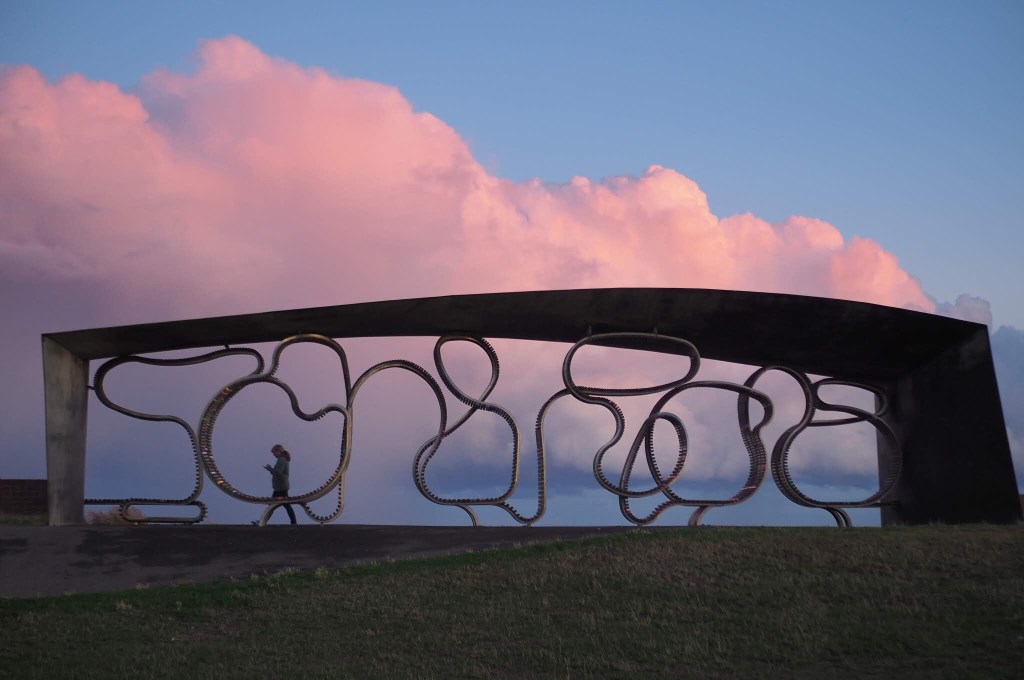
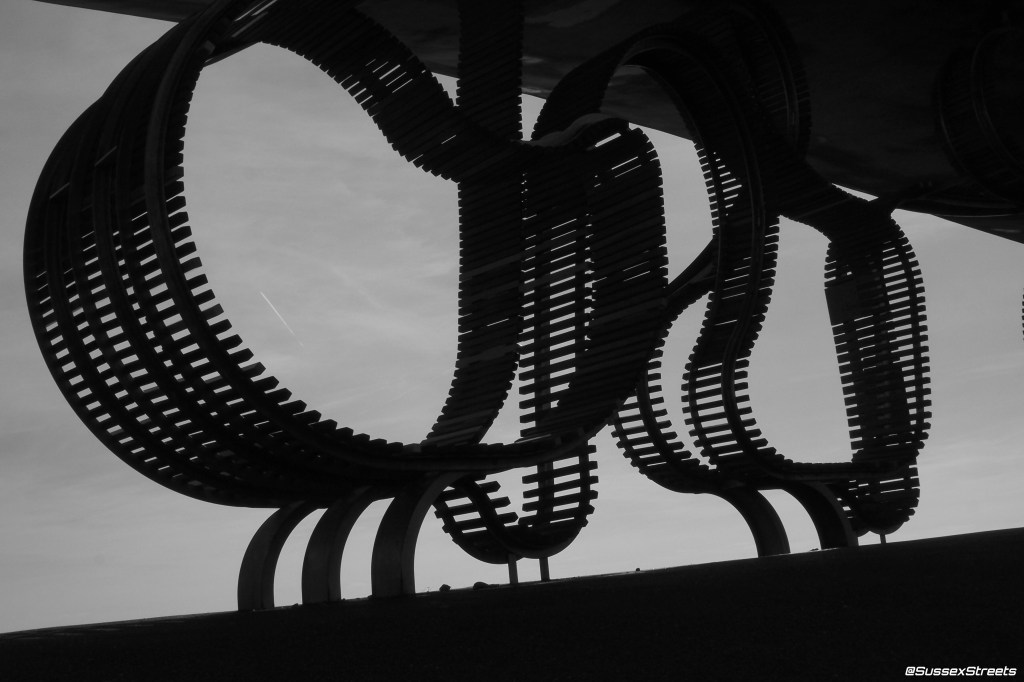
Accompanying me on this leg of my run was Littlehampton’s colourful long bench, which dips and twists along the prom. I was reminded of my early teaching years when I worked at the local school that had been proudly involved with the design of this bench.
The twists and turns of the long bench
Now an established part of Littlehampton, this iconic structure includes wooden slats, some of which include simple, yet heartfelt messages and memories from local people. Whether or not it is the longest bench in Europe (which I believe has been a much discussed claim), it certainly provides a sense of community, a place to rest, a chance to remember, an opportunity for memories and an interesting talking point among many.
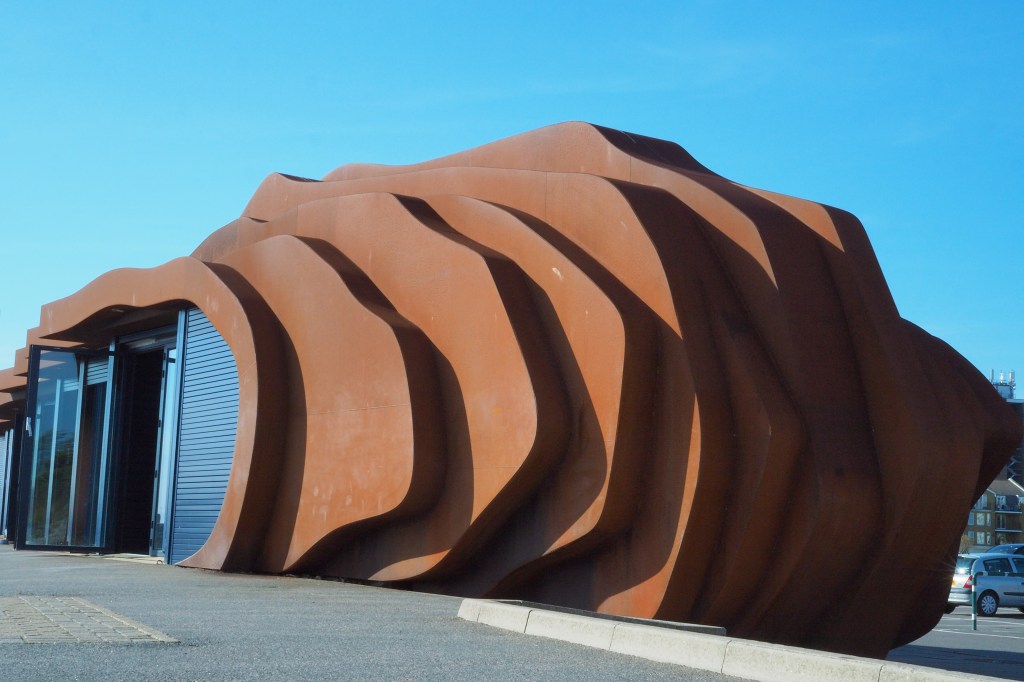
When the bench stops, you reach East Beach Cafe. As I ran passed, I fondly mulled over the various affectionate (and some less affectionate!) names that locals have for this establishment. Opinions on this cafe vary and, depending on what name someone uses, it gives a good indication of how they feel about it. Yet, whatever people’s thoughts, it can easily be argued that this distinctive piece of architecture has helped to embed Littlehampton on the map of perhaps the more discerning customer. It has won awards and has been well received by various critics, and it has, on occasion, even made the papers. Regardless of the publicity, we can safely say that it has become an established landmark in this seaside town.
East Beach Cafe
Within the length of the next kilometre, I noticed just how plentiful Littlehampton’s offer of sporting activities was within easy reach of the beach: crazy golf, tennis, pitch and putt, the skate park and also ‘Littlehampton Wave’ – the town’s local swimming and fitness centre, completely rebuilt to open in 2019. Conveniently located opposite the beach, this building provides a wealth of exercise opportunities for any and every kind of person. As I affectionately recalled my weekly sweat in fitness classes that I had regularly attended pre-lockdown, I continued running eastwards. On my right, the construction for the new kite-surfing cafe looked like it had resumed; this was a project that has been on the cards for a while so it was exciting to see development on its foundations.
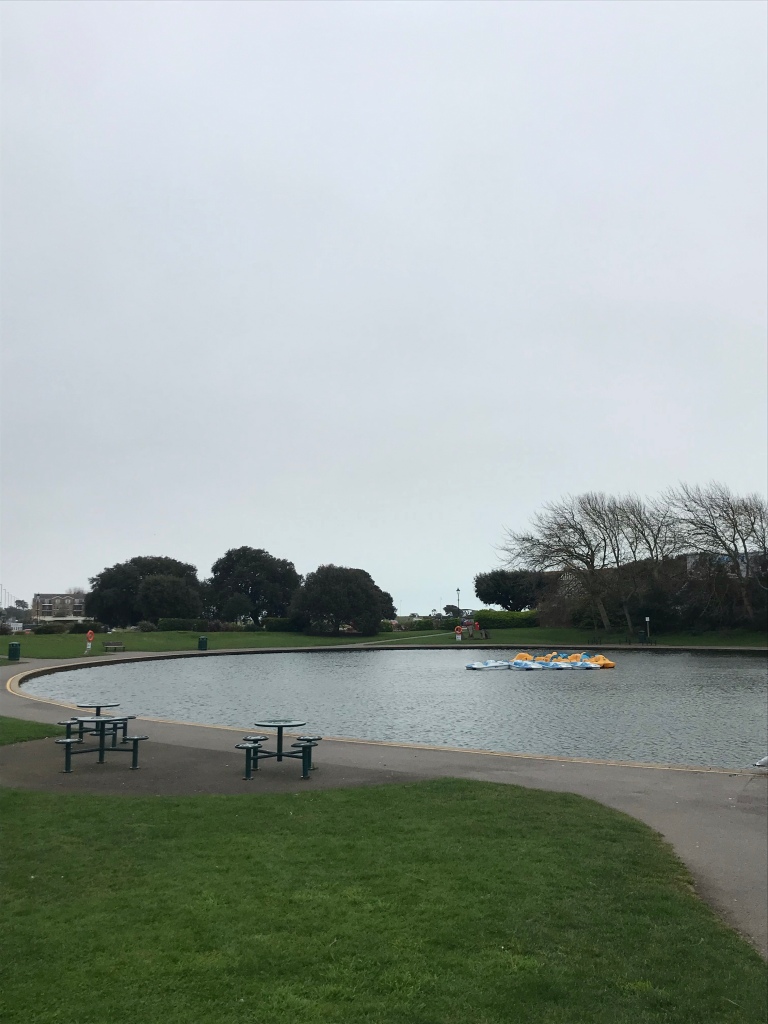
Veering inland to the left, I passed through Mewsbrook Park; aside from the odd dog walker, it was relatively quiet on this particular morning. Given the exceptional circumstances, the usual happy hub of Littlehampton life was absent: the boating lake and it’s viewing platforms were empty; the cafe remained closed and the children’s play area was still out of bounds. Soon I crossed the border away from Littlehampton and I mused on how much I had enjoyed returning to my old, familiar running route. It was a pleasure to appreciate this seaside harbour town once again.
With my travels unexpectedly interrupted by the spread of the corona virus, on more than one occasion it has been mentioned by friends and family, “Oh but you must be bored,” or “You poor things not being able to travel.” When I hear this, I find myself having to justify why I don’t feel either boredom or self-pity. I thank them for their concerns with an underlying feeling of guilt because at this point in time, there are far more pressing worries in these ‘COVID-19 times’.
Initially we did have to adjust and accept the fact that we could not continue our travels to Spain, Croatia and then take the planned long road-trip through Italy to Crete. However, it has actually been relatively easy to recalibrate and I am certainly not in a position to be dwelling on my misfortunes of not being able to travel. There are clearly other people on whom to focus: the elderly, the vulnerable, the key workers and how the effect of isolation and inaccessibility to vital resources can be managed.
“Oh, you must be bored?”
Bored? No. It is not worth dwelling on what you can’t do. The best thing is to focus on making the most of the opportunities that are presented by unforeseen circumstances. In this case, I have settled into home-life just loving the fact that I have time to discover new hobbies as well indulging in long-term loves, which I never had time for before or which I was too exhausted to do when my job dominated my life. I can now spend hours at a sewing machine, learning Greek, running an increasing number of kilometres, cooking, yoga, catching up with the classics on audiobooks, chatting to my family and friends, crocheting, thinking about and writing a number of unfinished blogs, reading paperbacks and also e-books on a Kindle, painting doors and walls, growing vegetables and herbs, catching up on TV, listening to podcasts, as well as learning through thoughtfully-selected online OU courses.
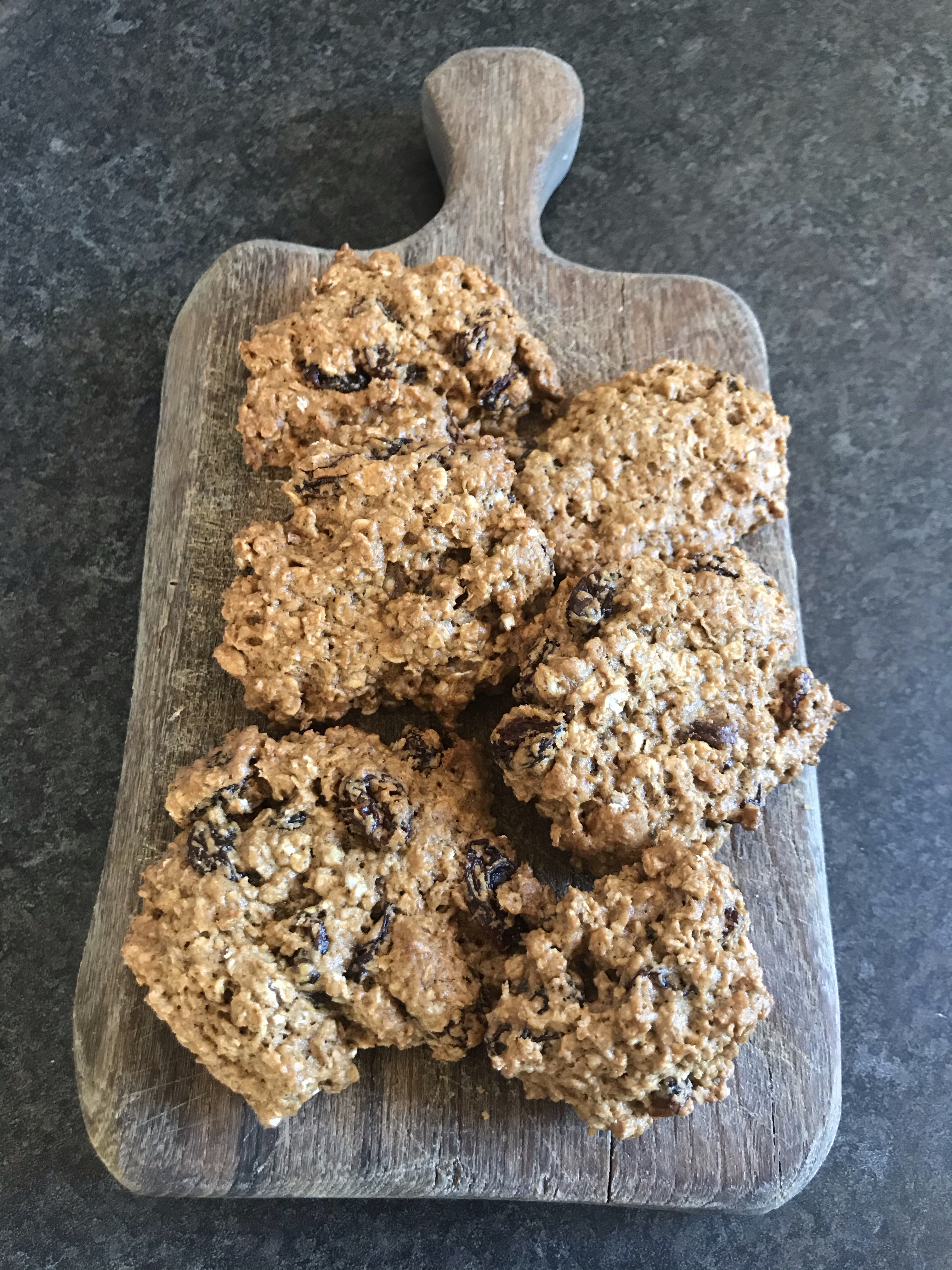
Deliciously homemade!
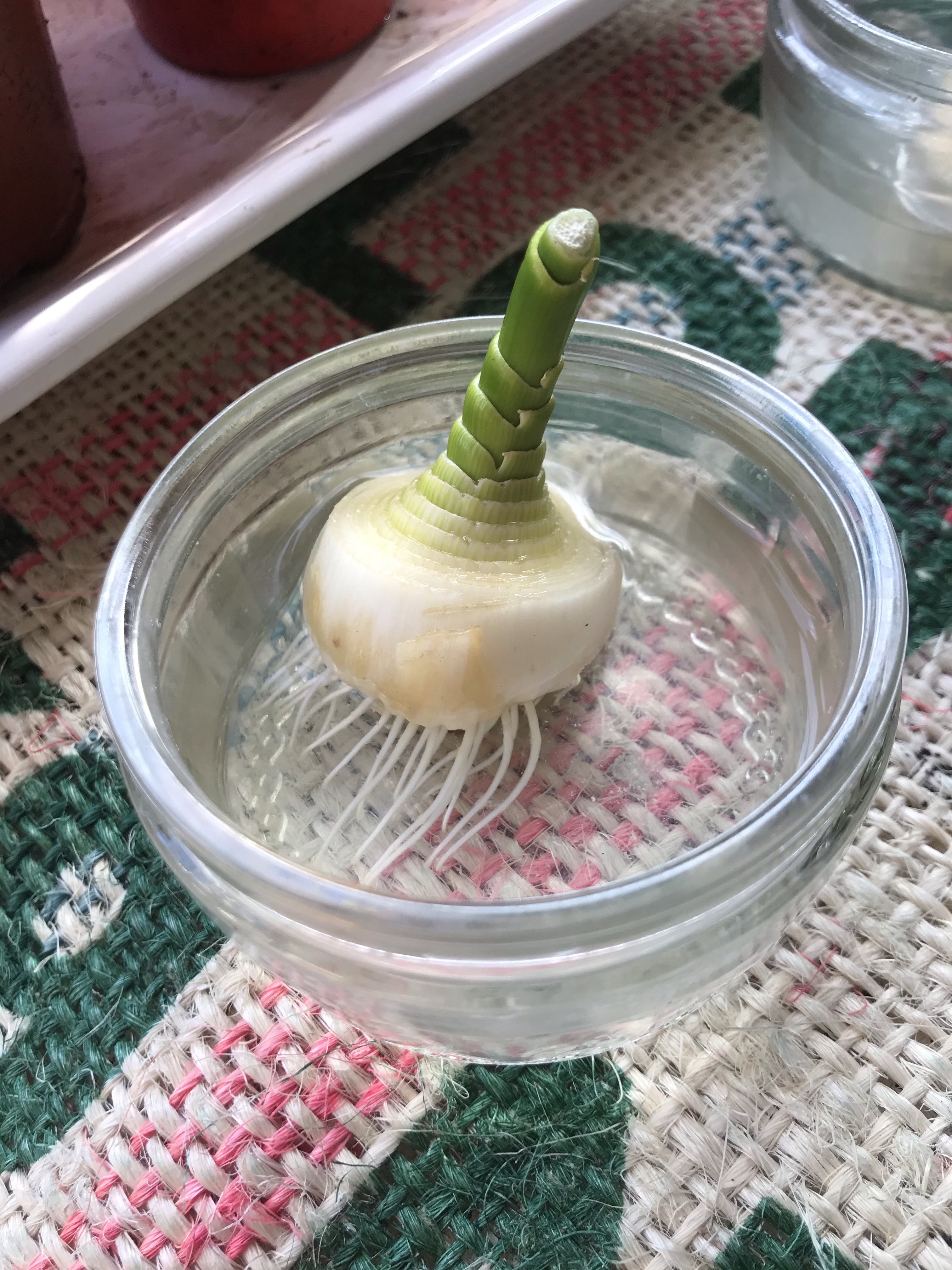
Home grown leeks
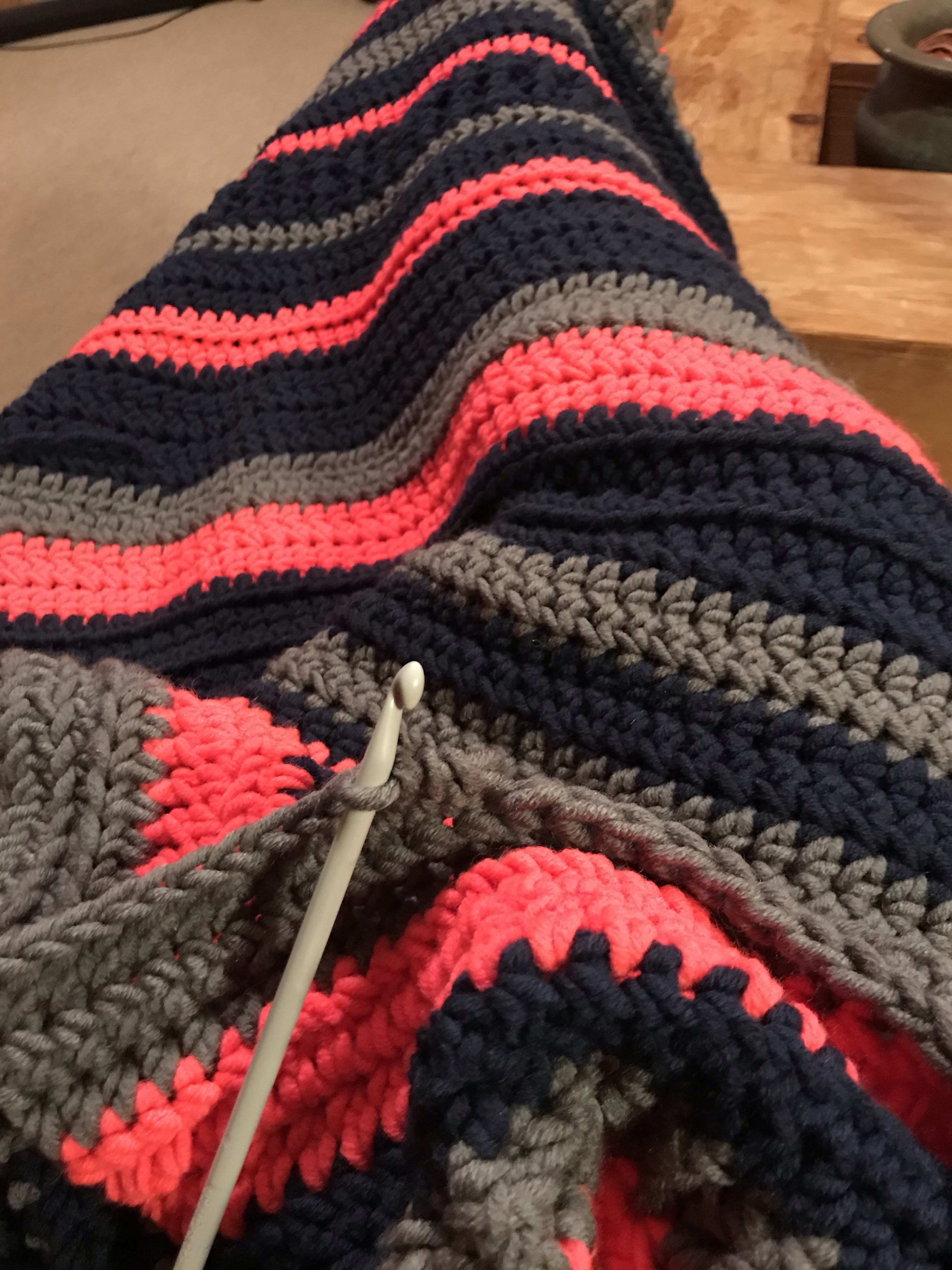
Multi-tasking: Crochet and TV!
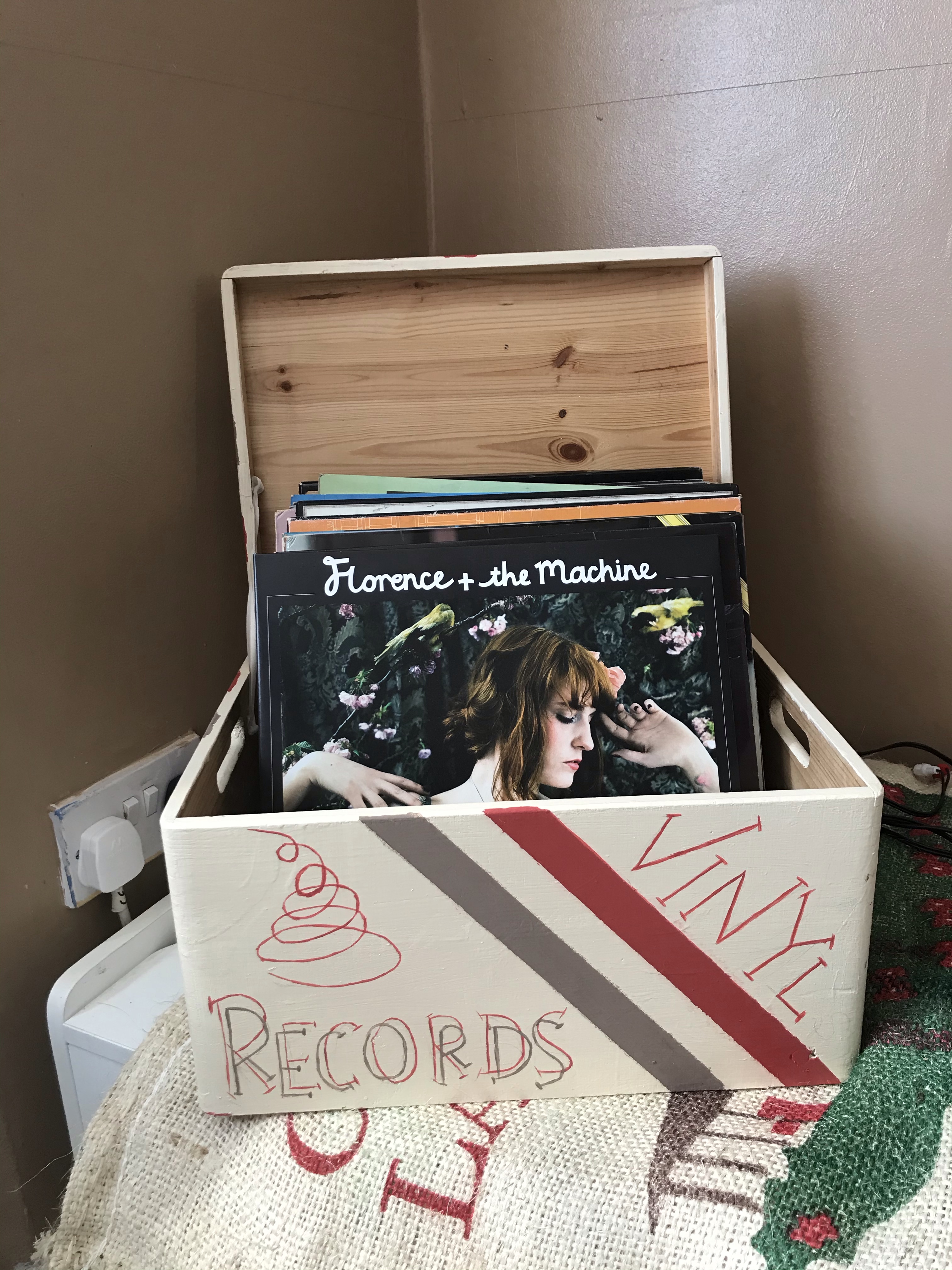
My newly painted box
“You poor things not being able to travel.”
When people expressed an element of feeling sorry for us for not being able to travel, a sense of awkwardness set in when I considered my current situation. I wasn’t a key worker, I wasn’t a front line NHS worker, and I didn’t have to worry about my job – whether I would lose it or put myself at risk by working. Having already given up work with the plan to travel, no one was expecting me to be anywhere to do anything at any time. So it was easy to adjust to the changes: I was just in a different country than I had intended to be in. I certainly didn’t want anyone feeling sorry for me. For the time being, travelling has to wait, which it will.
With time at home now available and in an attempt to contribute some sort of worthwhile support in this current lockdown, I signed up to be an NHS volunteer. Once accepted, with much anticipation I prepared to be immediately busy helping others, however no alerts came (or have come) through. Although initially frustrating, I can only assume that the lack of request calls has to be a good thing. So what else could I do to help?
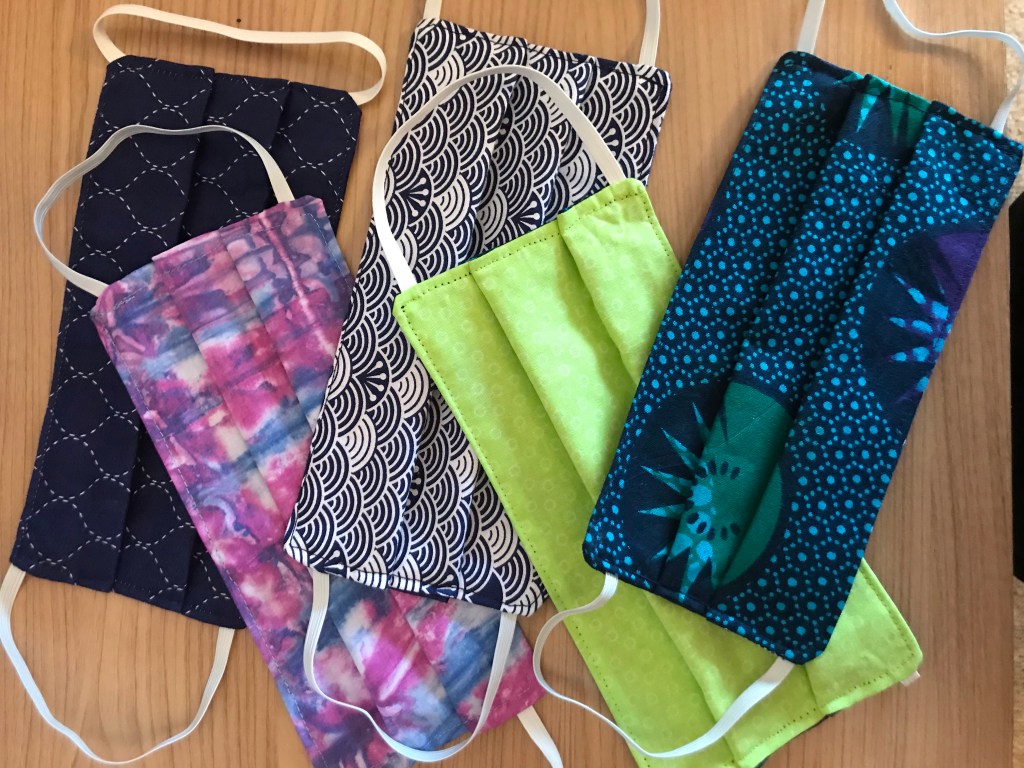
With recent discussion on whether face masks are beneficial or not to help prevent the spread of the virus, I am now busily putting my sewing skills to good use and making these. This was prompted by a request from my brother, who lives in London (with its concentrated number of corona cases) where he asked me if I could make some face masks for him and his family. This has since sparked off further requests so now I am feeling vaguely useful. My contribution maybe small, but it is valuable to some.
Face masks #handmadebyluce
None of us planned for these last few weeks and who knows what life will be like over the next few weeks or months. But, cliche to hand, don’t forget that every cloud has a silver lining – you just have to make sure you find it.
I left my job at the end of December 2019 to go travelling during 2020. Little did I know that it would possibly be the worst year to travel. In fact, no ‘possibly’ about it! However, the proverbial phrase that says ‘every cloud has a silver lining’ is proving its worth. I have discovered my own unexpected, but much welcomed lining which I am nurturing with a surprising amount of passion and care.
With the unpredictability of countless weeks of social distancing, isolation, lock-down (whatever you want to call it), our travel calendar has been left to collect virtual dust and oodles of time at home has suddenly became available. Soon after arriving back in the UK (Was it really only three weeks ago?) we pretty much settled in for the ride in the confines of our home space and it was our first weekly visit to the supermarket that got me thinking as I sauntered along the aisles looking at empty shelves. Shelves that represented unnecessary panic, lack of common sense, selfishness, disregard and ignorance.
After I suppressed my initial anger at the thought of the waste that these hoarders would be discarding in future weeks, I began to think more about survival, self-sufficiency and self-preservation. With that, I now seem to find myself surrounded by various plant projects with a lofty sense of embedding my membership as a devoted eco-warrior now doing that little bit more to save the planet from unnecessary destruction. In reality, when I float down from my fluffy cloud, I am just doing some simple gardening to grow my own foods.
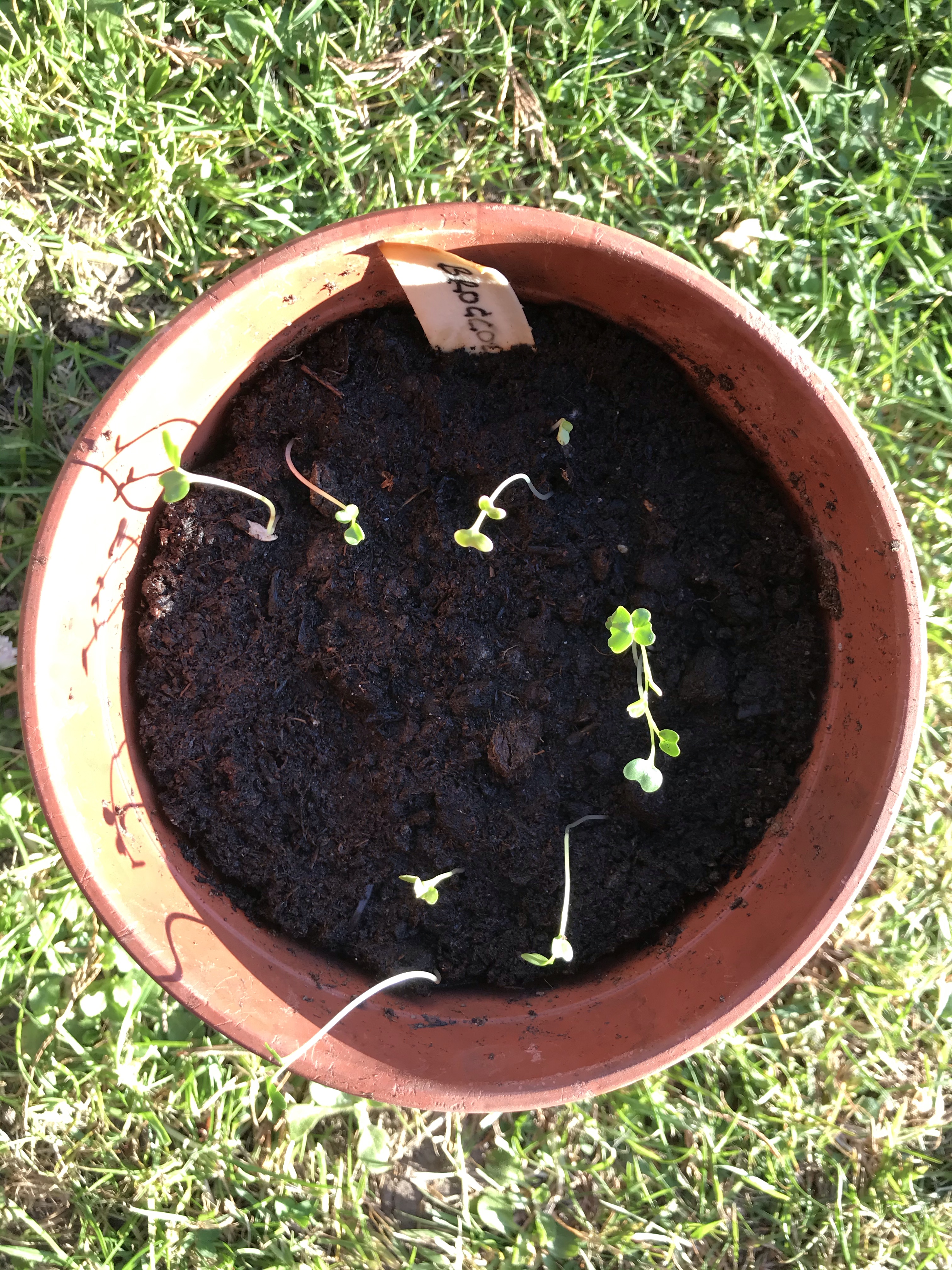
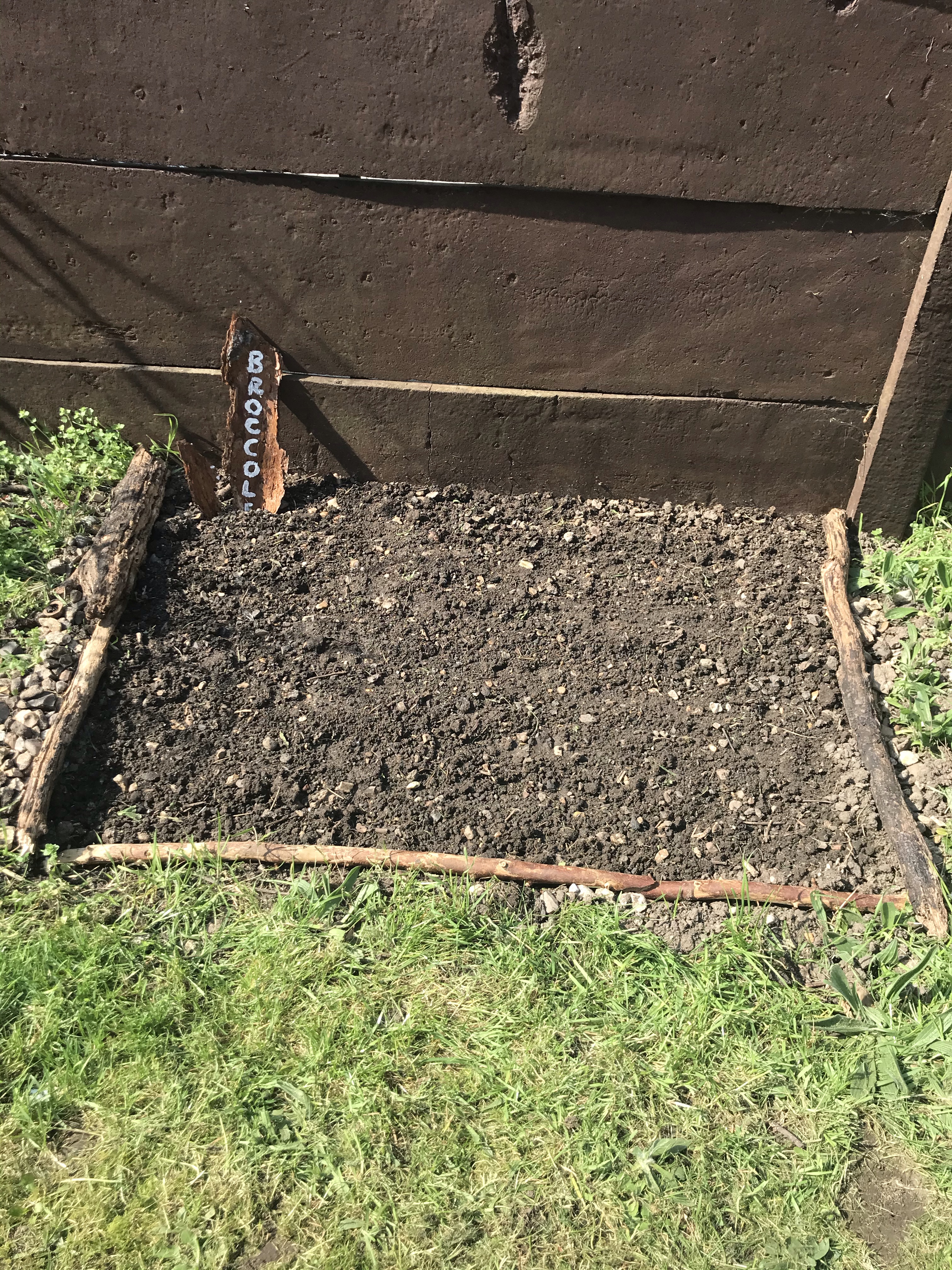
Broccoli – so far, so good
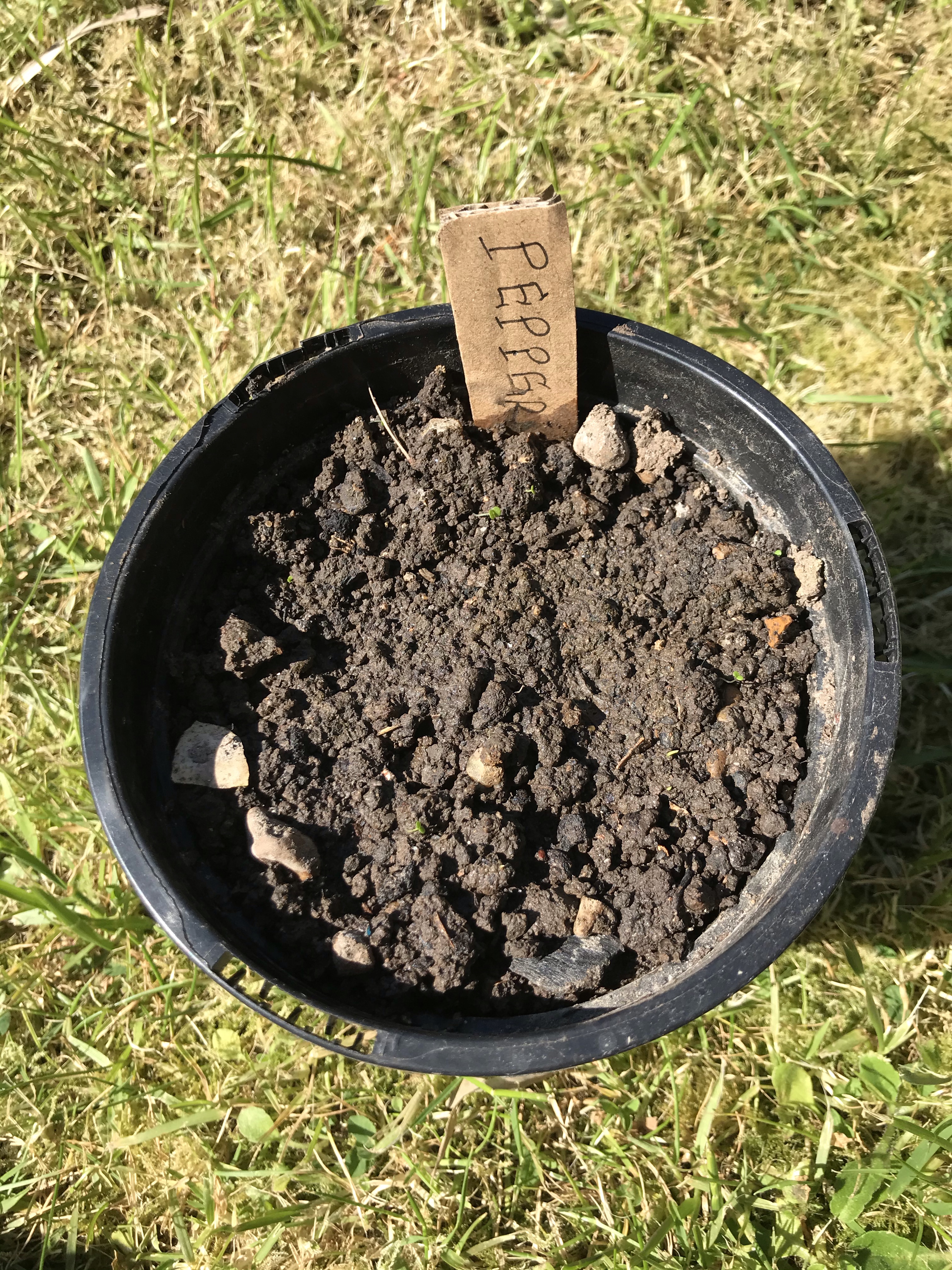
Ate the pepper, then planted the seeds
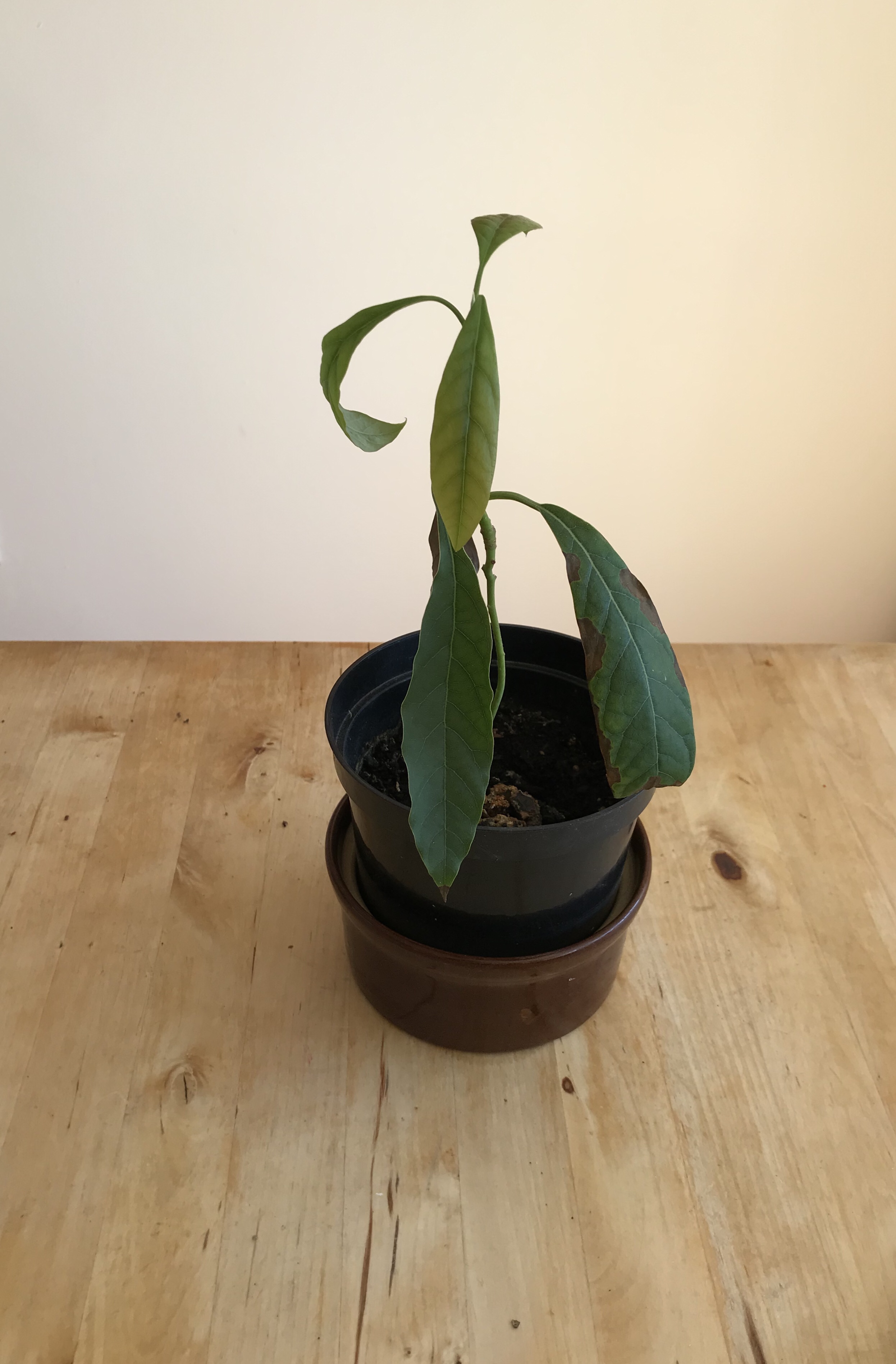
Grown from an avocado stone – a gift from a friend
So exciting to see green shoots appear!
As a novice gardener, I am constantly amazed at how simple it is to grow or make something from nothing and I cannot believe that I haven’t indulged in this – to any great length – before.
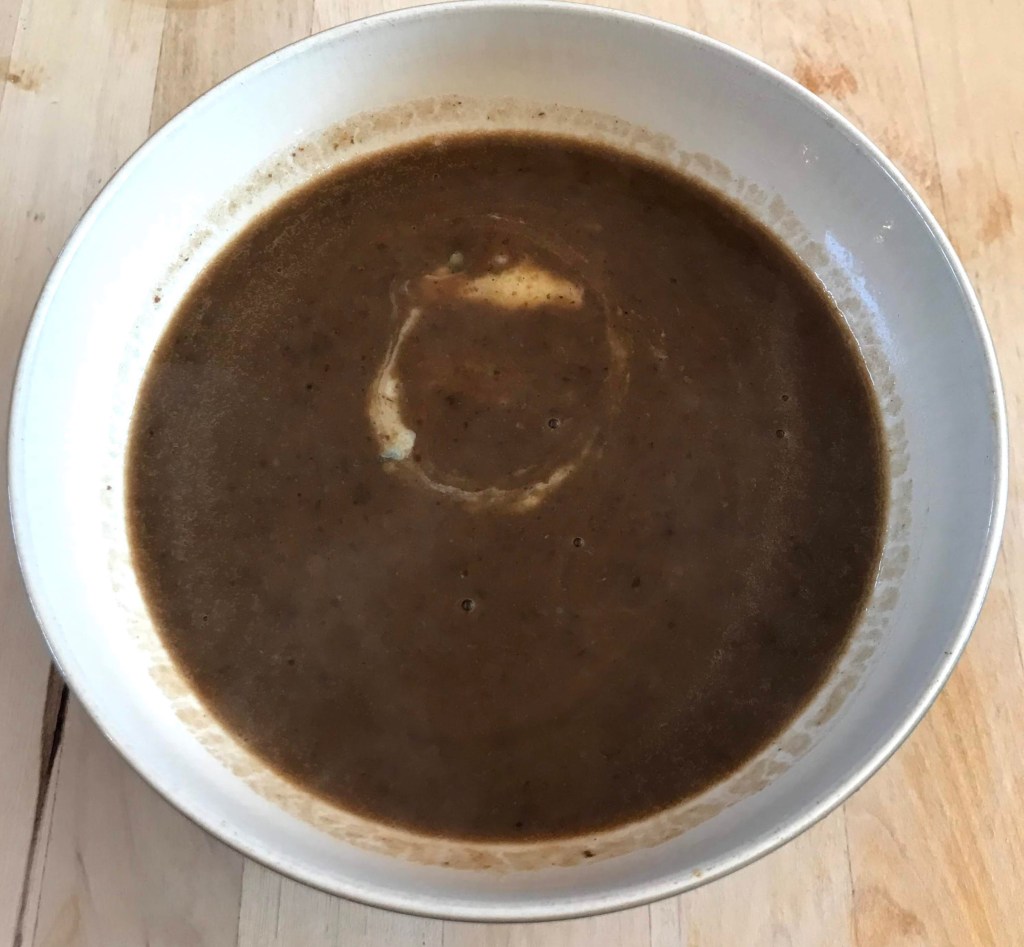
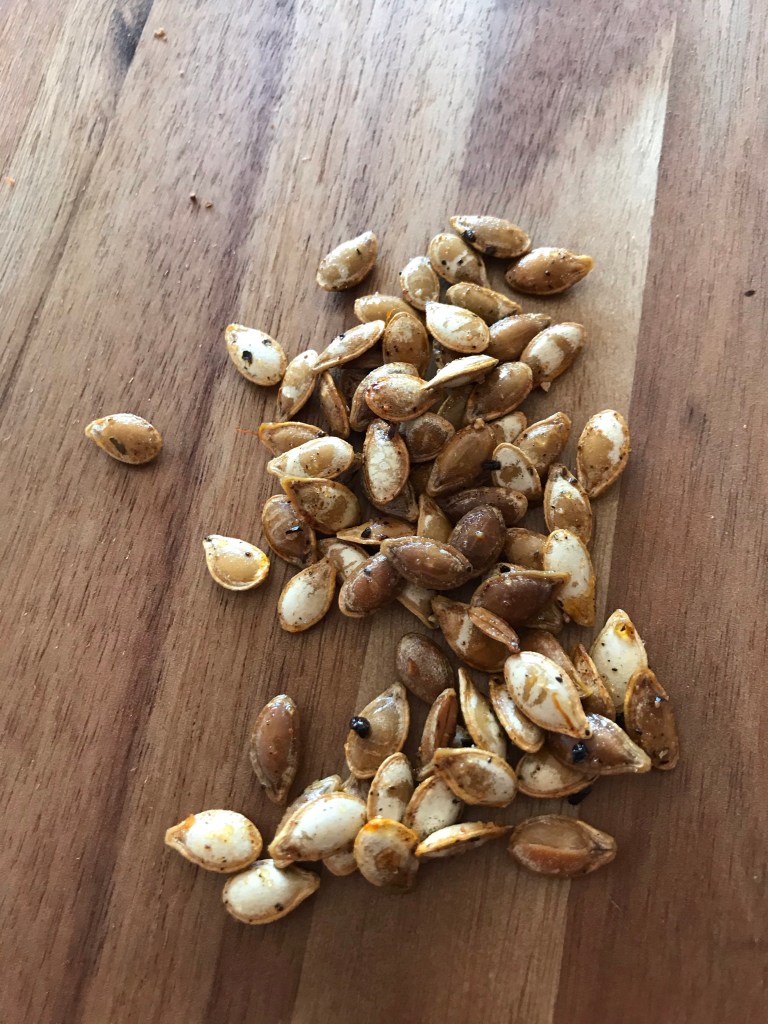
Surprisingly delicious soup made with potato and carrot peelings and with black beansButternut squash seeds – dried, Cajun spiced and roasted
With a quiet sense of excitement, I begin each morning by taking a peek at the ever-increasing ‘garden’ on the windowsills. I am still at the stage of feeling a sense of awe when a new leaf or additional shoot has appeared. As I chop vegetables for the family dinner, I ponder on what I can do with peelings and unused leaves and I am regularly searching for the more places to dig and plant in the garden.
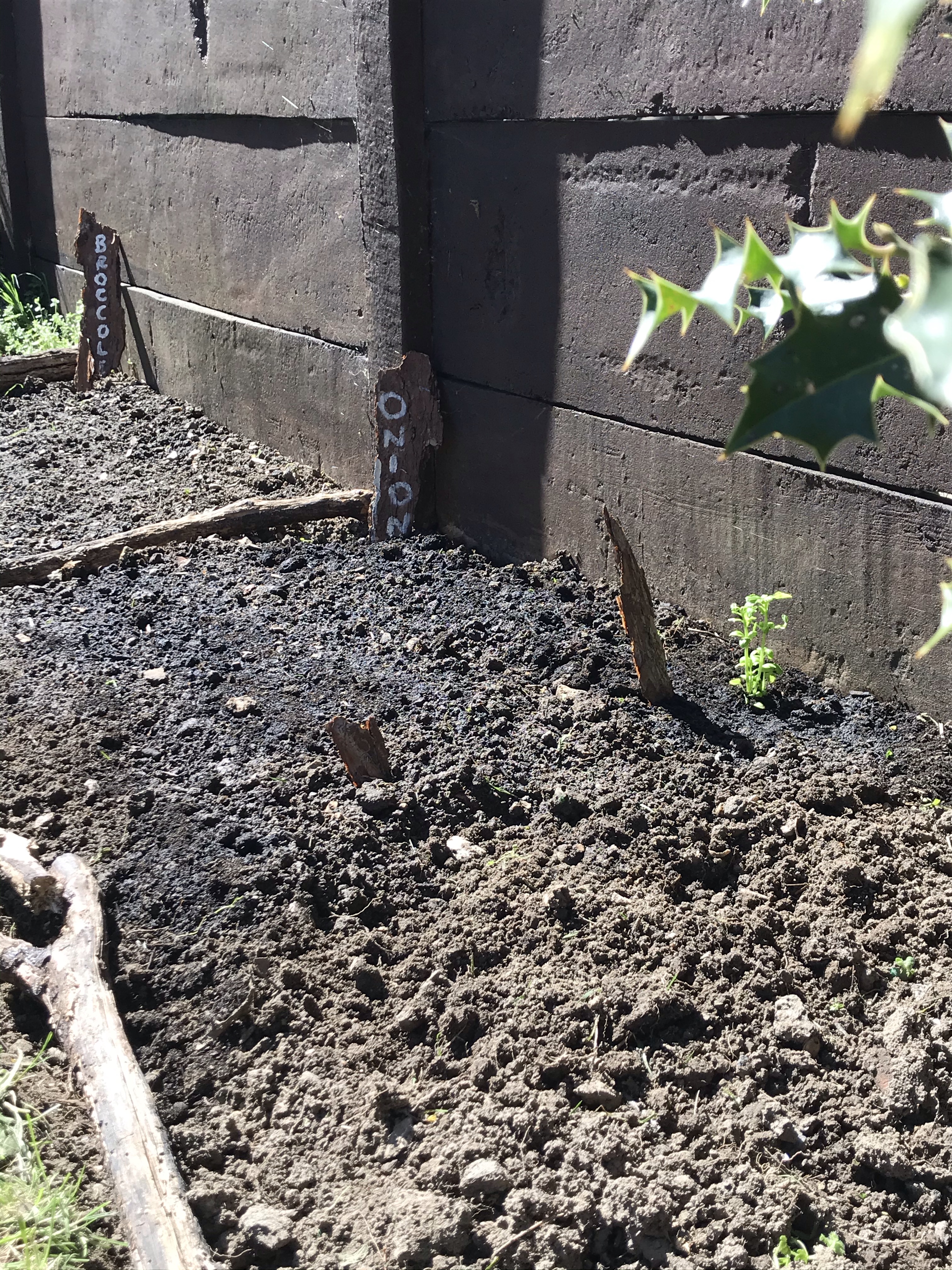
Attempts at growing broccoli…
…and onions
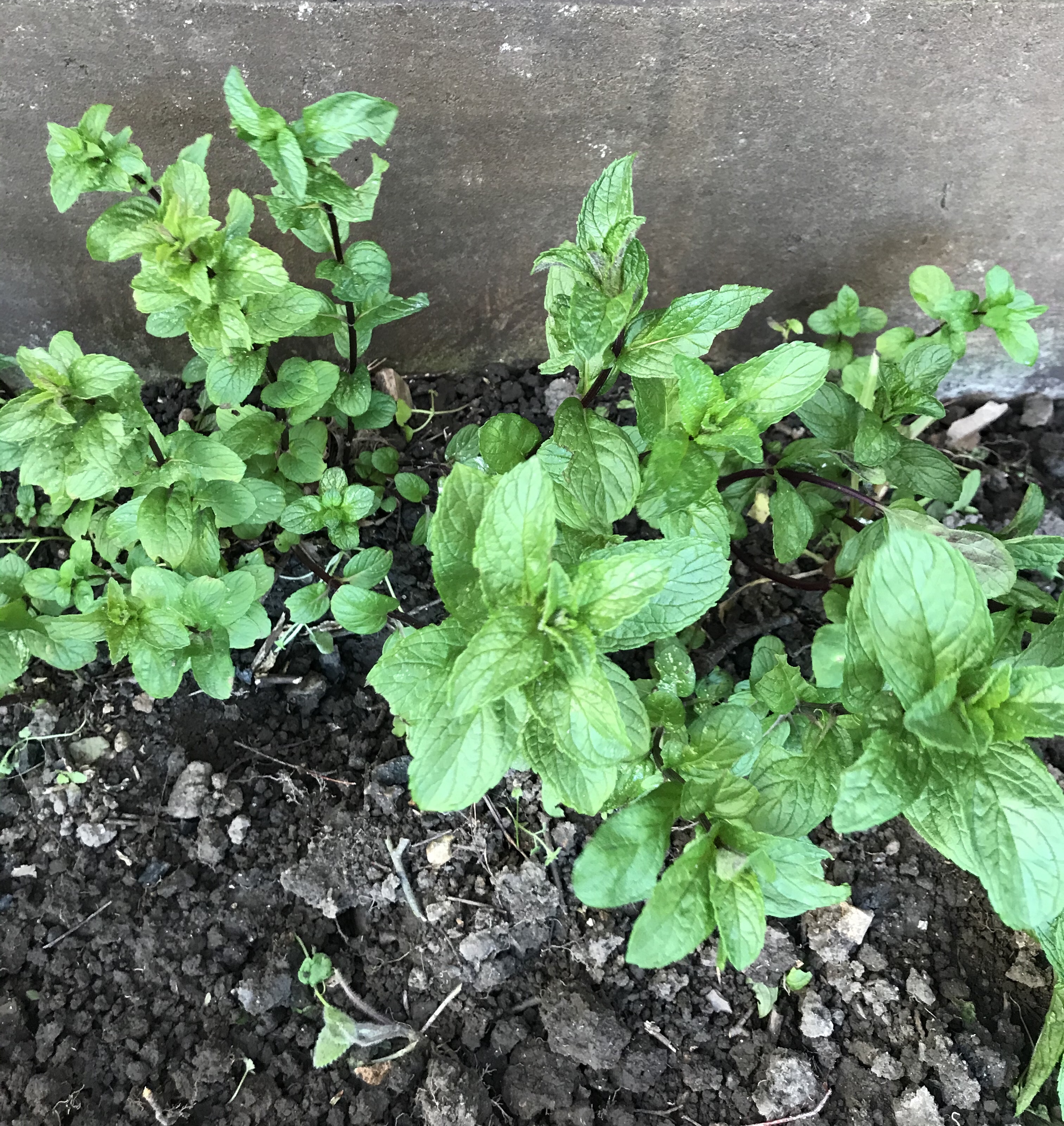
Mint discovered after a cathartic, gratifying weeding session
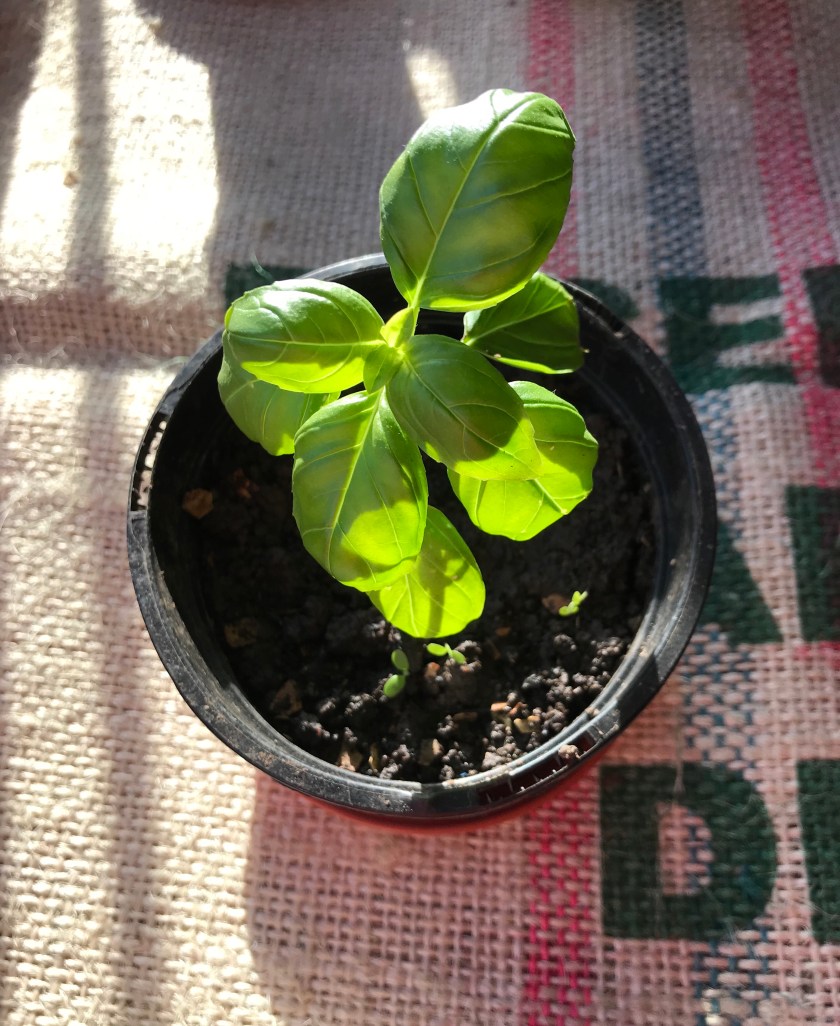
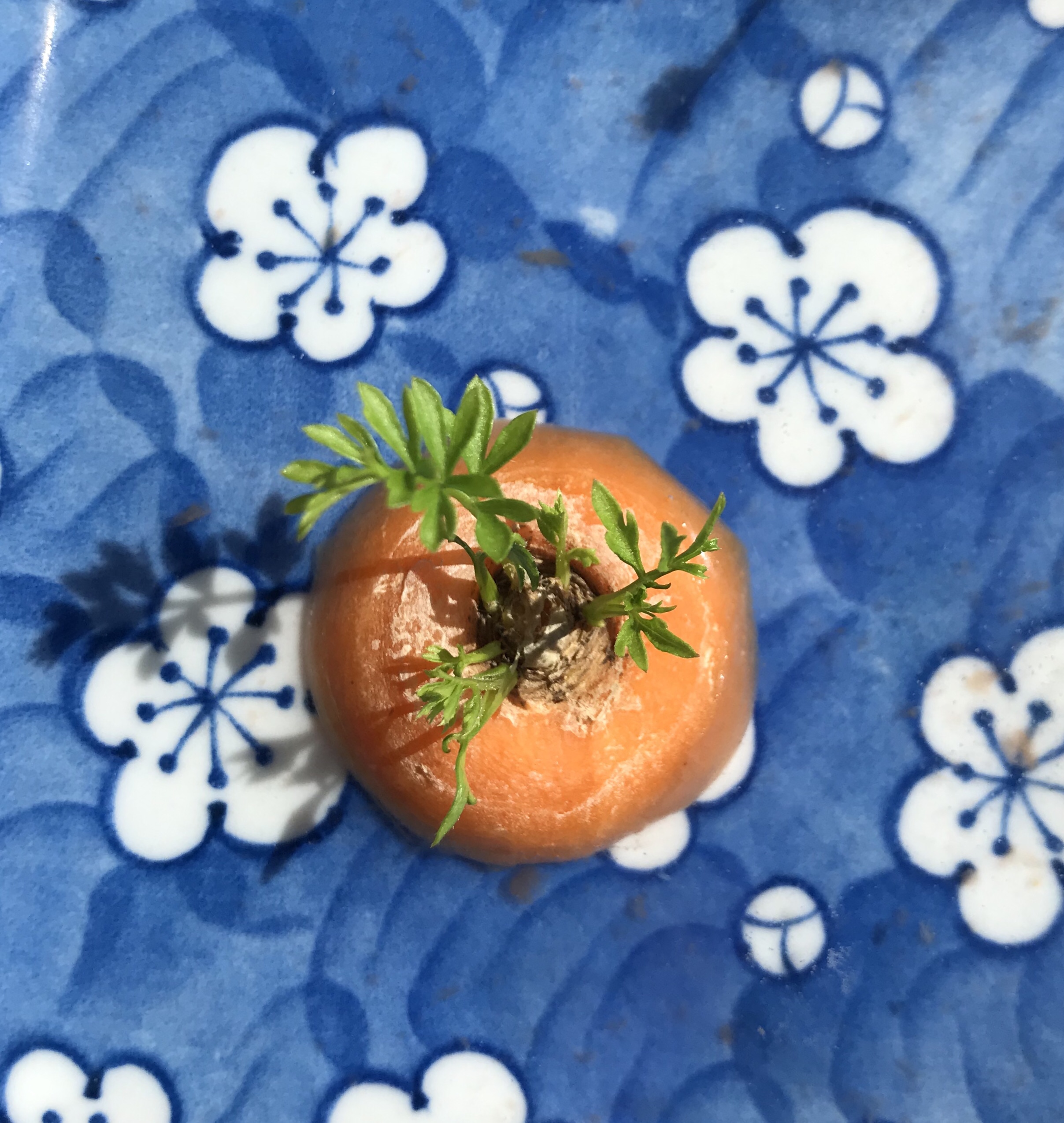
To those of you who are ardent, experienced gardeners, you may be laughing at my green-fingered innocence, but I am so content with peering at the carrot tops, studying the growth of the chilli shoots, chatting to the basil and marvelling at the proud avocado plant, that I don’t mind in the slightest. Or you may be standing there with a broad smile on your face pleased that another like-minded soul has finally seen the beauty and value of your long-standing way of life.
Tomato plant from a local farm shop
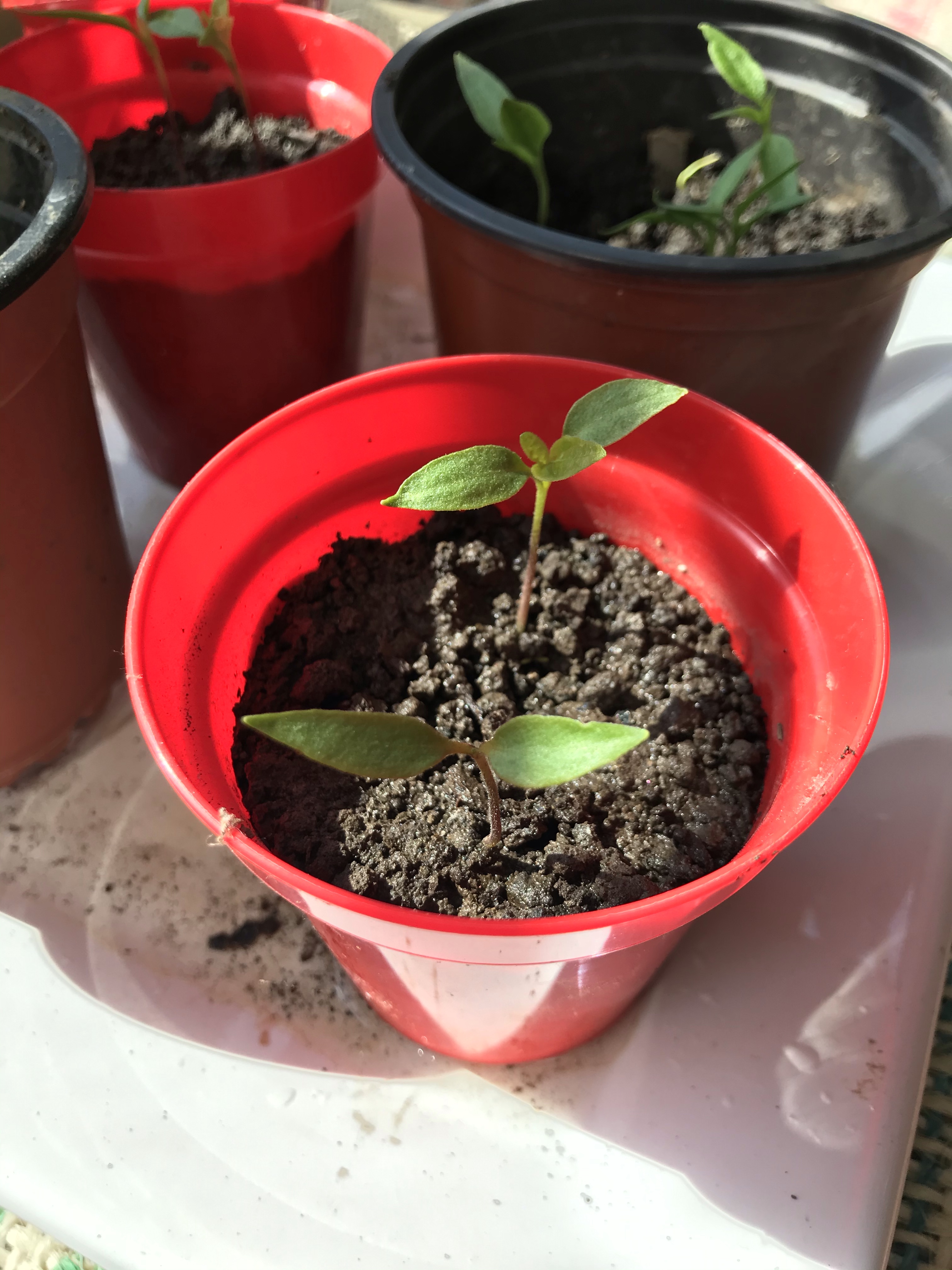
Chilli seeds from Wahaca
I am having so much fun being surrounded by my green-leaved friends and I love that reusing some of my usual compost waste as well as nurturing seeds and growing vegetables has become my silver lining during this time. My newly found eagerness may not last beyond this year but that doesn’t matter. Travelling still beckons and, as soon as the all clear is given, I shall be filling my backpack and leaving. For now, however, I am busily occupied and thrilled with learning how to grow something from nothing.
When I was researching travel blogs, I remember reading a comment about how it can be important to reflect on your own local surroundings as well as writing about any visited distant lands. Given the current advice of ‘social distancing’ in the UK, which has meant that we have had to abandon our travel plans for now, this blog is me taking time to pause and reflect on the present situation.
We returned to the UK just a few days ago, with a mix of apprehension, curiosity and uncertainty. After a planned pit-stop weekend at home, we had flights booked to Spain (which left yesterday without us) but with events changing daily across Europe, it was clear that our travelling was going to be interrupted somewhat. The countries we had visited for the last 10 days (France, Switzerland, Luxemburg and Belgium) had shown no signs of any unusual behaviour, but we were hearing stories of panic-buying in the UK and lack of stock.
Happy travels!
From across the Channel, it all seemed a little unreal and if I’m honest, a bit of a joke, but just to be on the safe side, before we headed home, we did buy one pack of toilet roll when our daughter at home in the UK said that she couldn’t find any to buy. With the situation becoming more and more drastic by the day, we arrived home with news of a lock-down in several countries – some which we had been planning to visit in the next few weeks. Resigned to putting our travels on hold, now like many others, we are settled at home and living as official ‘social distancers’.
Thank you Luxemburg!
On our first day back in the UK, we took a trip to the supermarket as we had nothing in the house. This was an interesting experience: there was a calm sense of almost-inaudible eeriness as people pushed their trollies around in hope of filling them up. Every so often, a customer was heard to exclaim, “I can’t believe it!” as they fruitlessly walked past an empty shelf or down a deserted aisle. I was quite astounded to see so many products absent, but I was adamant that I wasn’t going to allow myself to get annoyed. Instead, I felt the urge to start clearing up and flat-packing the vast amount of empty discarded packing boxes.
Continuing with an open mind, we mused on the profile of the customer who was buying up all those essentials, not just the obvious items but even products like sesame oil. I was so glad that I had bought that pack of precious toilet roll in Luxemburg before travelling home because we haven’t been able to buy any in this area. At odd moments, I half-heartedly find myself doing mathematical calculations on number of sheets x people in the house x visits to the loo. Plans for a compost toilet are in their early stages and use of newspaper or rags are up for discussion! In reality, it doesn’t matter; I am sure we’ll find some if we get really desperate. Toilet paper is the least of problems when you consider the issues people are faced with: jobs, health, finances, childcare, housing, isolation…
So far, I think I am doing this social distancing thing pretty well. Yes, I know we are only at day 4 so positive thoughts all round at the moment! Ask me next week and my optimism may be waining. Initially, I was worried that I would have endless hours indoors and end up watching pointless TV and eating for England, but the beauty of ‘social-distancing’ is that you can still go out for a walk, run or amble as long as you keep a sensible distance from others.
Yesterday morning I went for a gorgeous 8 km run around my local area and it was perfectly fine. At the start of my run, it was lovely to bump into a friend I hadn’t seen for a while. When I say ‘bump into’, we actually stopped and had a catch-up, each standing on opposite pavements with the road as the sensible safe space between us. For a good number of years, we had been playground mum friends, but since our children have grown up, we don’t see each other often, which is a shame, but if I hadn’t gone for my ‘social-distancing’ run, then I may not have seen her so it was a bonus!
Observations during my run were that most people are mutually maintaining a respectful distance from each other in public areas. Where necessary, it was acceptable to cross to the other side of a road, veer off onto the pebbles on the beach or pause and reroute in order to avoid a person or to distance from a group of people enjoying a more spaciously aware chat than usual. People moved out of each others’ way and we did it with a smile.
It was lovely to be able to say ‘Good morning’ to everyone I ran past. This is, however, with the exception of one person and I must belatedly apologise to them. In my somewhat poor defense, I was at a rather tense moment in my Archers omnibus podcast (if you listen, you know what I am talking about!) and so I have to confess, I skirted around the lady without acknowledging her.
I circulated the Oyster Pond at least once to ensure social distance
There was only one slightly awkward moment on my run when I was about to turn inland and run down an alleyway. Coming towards me, down this particular narrow walkway, was an elderly woman walking her dog, so I turned and jogged along the grassy area just off the beach until she was clear of the alley. As she exited the path, she appeared to look nervously across to me. I hope that this was because she didn’t want to pass too closely to another individual rather than her feeling offended that I had deliberately waited until the alley was clear, but better to be safe than sorry.
People will have various thoughts on this difficult and unfamiliar situation that we are currently experiencing here in the UK and elsewhere; there may be acceptance, denial, refusal, confusion, sadness, uncertainty – even humour. Whatever these unusual times bring to us over the coming weeks, if you don’t have any symptoms and do have the opportunity to go out and enjoy the outdoors, I highly recommend a walk or run. Exercise can be a real tonic for both physical health and mental well-being.
And if you are out and about, please don’t forget to smile and call out a friendly hello to anyone you pass at the now socially-acceptable-greater-than-usual distance. If you do see me and I ignore you, it will only be that I am gripped in the middle of a dramatic moment in a podcast – I apologise in advance!
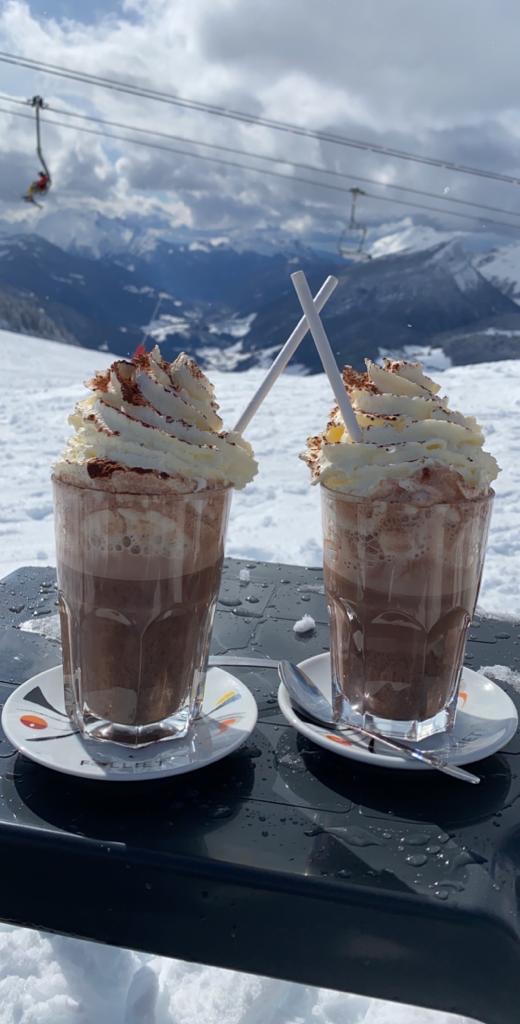
Dressed in black salopettes and sitting opposite me in a restaurant on a French ski slope, a wise man was once sipping a rather luxurious looking ‘café Viennois’ and said, “This is what I go skiing for.”
It’s true. Food and drink can be an important part of a skiing holiday for some people, but perhaps not the reason for booking one! Here in the Haute-Savoie région, particular sumptuous consumables have become firm favourites in our family. They are not necessarily unique to this region so you may have enjoyed them elsewhere, but wherever and whomever, when ordering these heavenly French recipes, you know your taste buds are in for a treat.
A favourite ‘Schumy pizza’ with goat’s cheese and honey
Fondue
An absolute must is a fondue. This has become a firm family tradition: an evening out that includes a shared pot of heavenly fondue where every single calorie of melting cheese is worth it. After a few hours skiing, sufficient energy is burnt off so it is, of course, understandable that one deserves a treat of dipping countless cubes of bread into the rich cheese deliciousness for one evening. It would be rude not to! I’m sure the compulsory green salad on the side is only there to ensure that the arteries relax a little during the meal.
Fondue Savoyarde
Les crêpes
Another must-eat is the well-known French crêpe. (I speak on behalf of my family on this one as I don’t usually eat them aside from cadging a corner of someone else’s.) In the UK, we seem to wait for that one day in the year to allow ourselves to indulge in pancakes, but here on the slopes, they are readily available and provide a welcome afternoon treat and essential sugar fix after a few downhill runs.
Toppings are plentiful and diverse and a quick family poll would suggest Nutella as the most popular choice (with a large dollop of ‘chantilly’ on those occasions of additional indulgence). However, the more traditional may opt for the lemon and sugar or if you need a boost, go for the Grand Marnier crêpe because they will lavishly soak the pancake in alcohol. They certainly don’t skimp!
Crêpe, chocolate and cream!
Tartiflette
Tartiflette is a gorgeous French dish and although it is traditionally made with ‘lardons’, we did find one restaurant that made a welcome vegetarian version without the bacon. Sadly, they no longer offer it and so with veggies in the family, we have reverted to a homemade version using, of course, the local cheese. The Aravis region is famous for its Reblochon, which is a soft-rind cheese with a slight nutty taste and is the basis for a tartiflette. Add potatoes and onions (and lardons if necessary) and you have the most delicious golden brown and bubbling cheesy meal. Staple ingredients at their best.
Our homemade tartiflette with Reblochon
When I think back to that wise man’s words, he can be forgiven for his exaggeration. Obviously the skiing is the main reason for a skiing holiday, however it would not be the same without the glorious French food. Bon appétit!





 Let Luce!