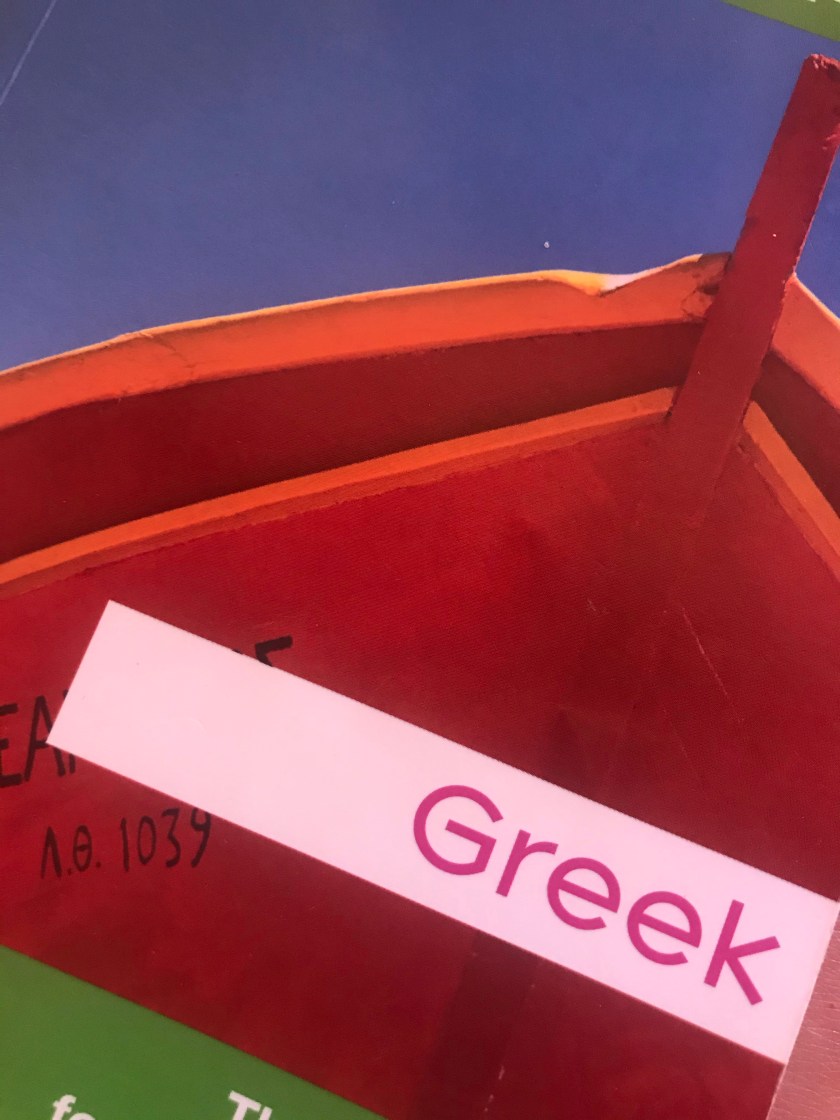
I have always been interested in language and communication, whether it is the origins of words; how children learn to speak and read; learning different languages or how to speak to someone using sign language.
Although I am not multi-lingual like some people I know (and I am in awe of the way they confidently flit between languages), my interest in words and communication led me to focus on languages throughout my education. I think it began when as a family we spent time living in Rome; I was a young child (at primary school) and had friends of different nationalities.
Here, I could also drop in a small mention of my wonderful Swedish grandmother who gave my family a Scandinavian side which perhaps also incited my interest in different cultures and languages. So it is with this smorgasbord of knowledge and experience that I write about my next linguistic adventure…
I have been visiting Crete for the last sixteen years and I have shamefully never got to grips with the language. The distinct Greek alphabet was giving me much grief and it became far more of an uphill slog compared to when I had learnt Spanish or French. Struggling over the years in a half-hearted attempt, I have dabbled with books telling me how to survive on holiday with beginner’s Greek as well as sporadically listening to a Greek language CD in the car: a pitiful attempt to learn key phrases at the same time as driving somewhere.
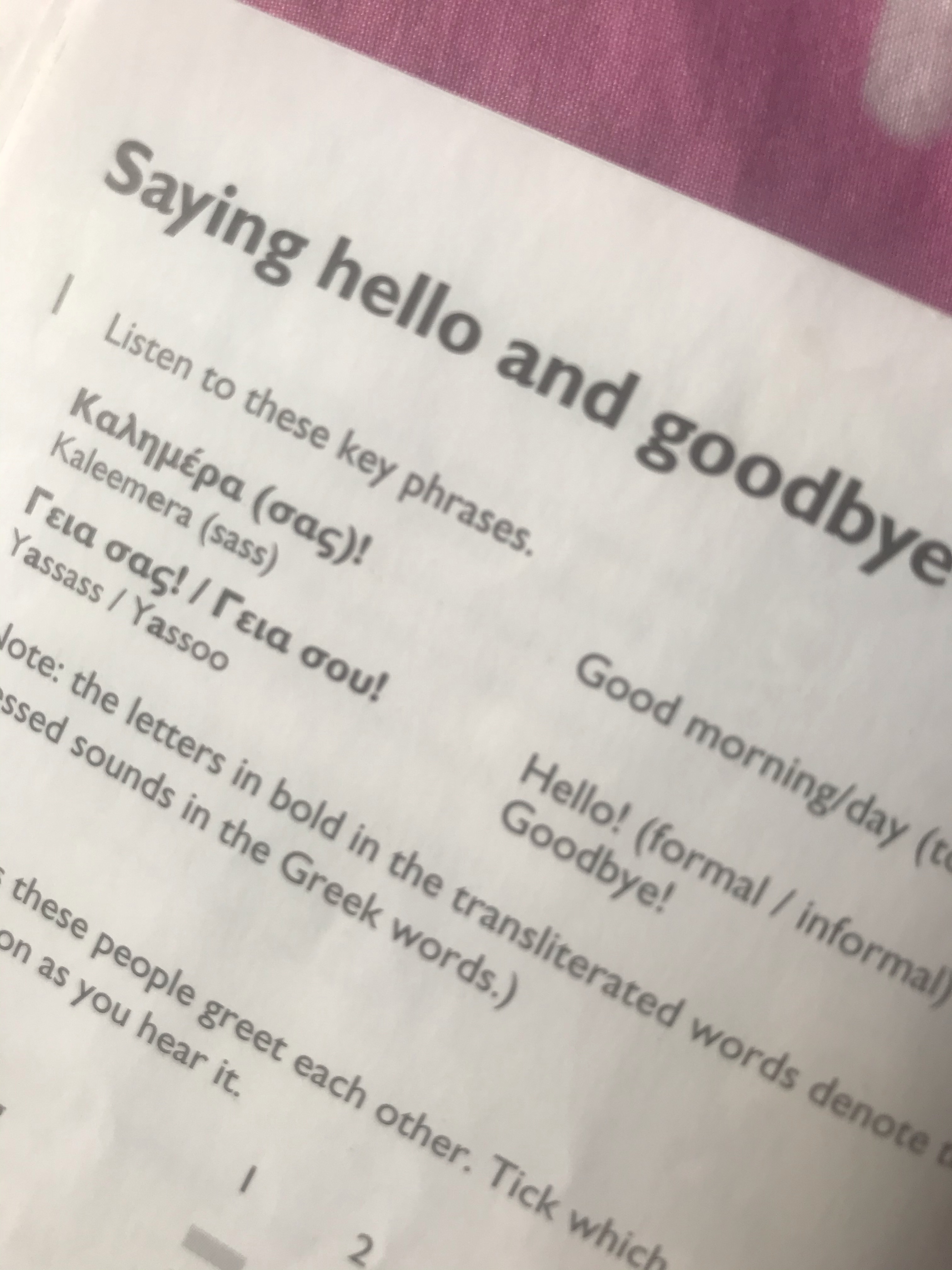
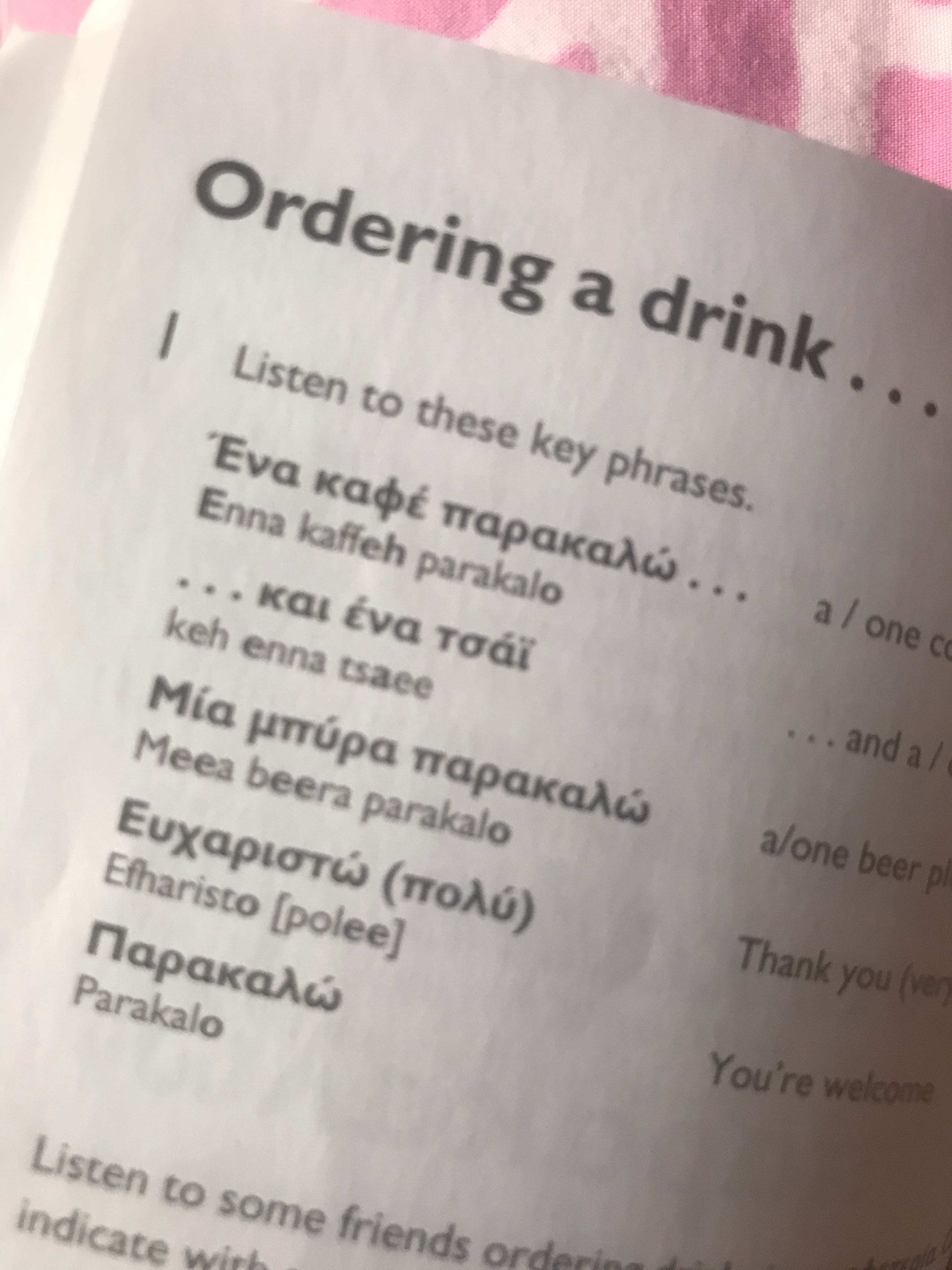
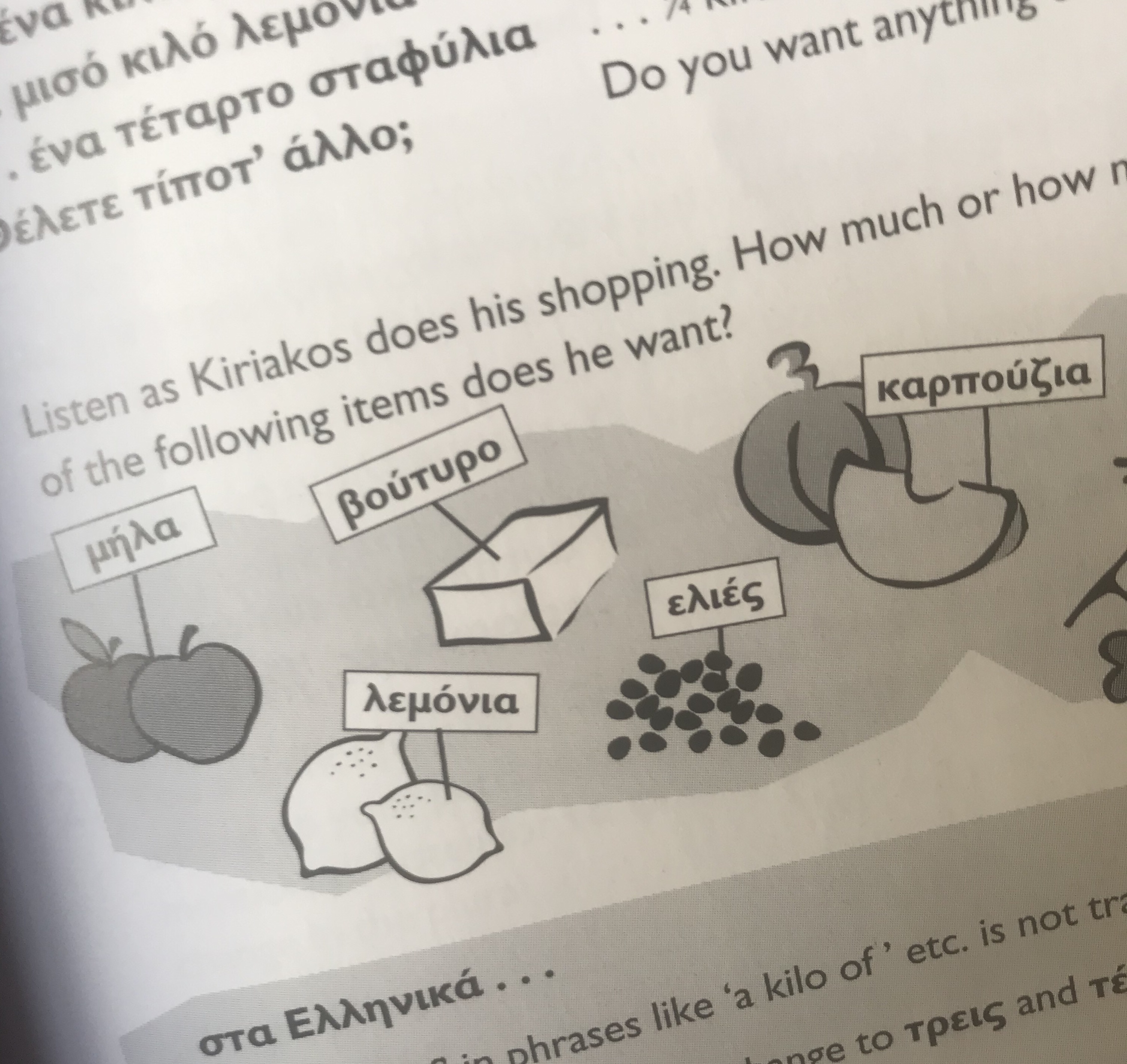
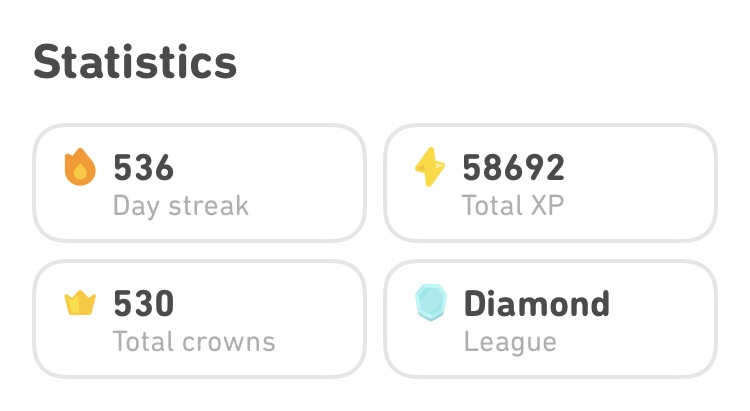
Soon, I realised I needed to do more and so last year, I began a more dedicated approach to learning Greek. I had heard of the popularity of the Duolingo app and so I decided to try it. I made a commitment to myself that I would do a little each and every day and make necessary notes to help embed my learning. Now, for about a year and a half – 536 days to be precise – I have stuck religiously to my daily lessons.
I knew I had to get my head around the Greek alphabet which I hadn’t done properly before so I made sure that I spent as long as I needed on the very first α, β, γ section in order to embed the basics before moving on. This was obvious, sensible and successful as it gave me the necessary solid grounding for each subsequent unit of work.
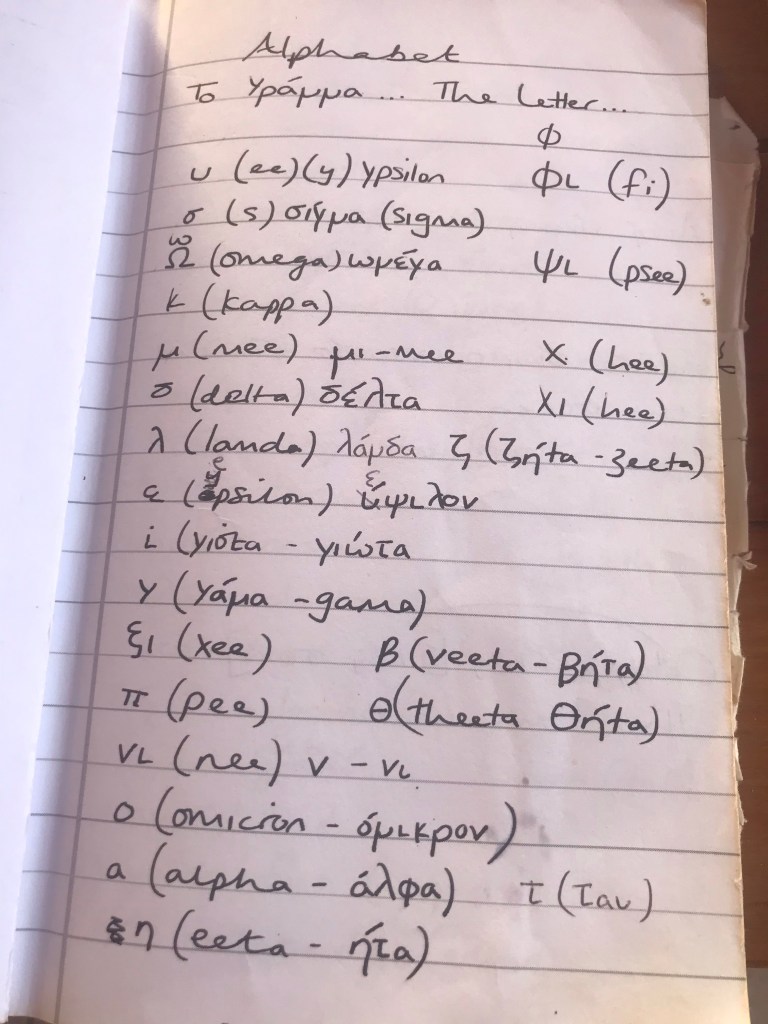
During my 536 days of Duolingo, whenever I was in Crete, I was gradually introducing more words into my verbal communication with locals but I soon found that I wasn’t progressing sufficiently to string necessary sentences together in conversation with any acceptable confidence or fluency.
So it is now that I am about to embark on my first group lesson at a local language centre in Armenoi, Crete. And I cannot lie – I am filled with a mix of fear and worry, but also excitement.
Despite being a teacher myself for thirteen years and familiar with the classroom environment, it is a whole different story when you, an adult, are back in class as a student. Now, on the eve of my first ‘official’ lesson, I find myself contemplating insignificant issues such as what to wear; I know that this is really to take my mind off the idea that I am going into a classroom of the, as yet, unknown. I feel like I have been tackling Greek for such a long time and I so desperately want these lessons to be successful and to be the gateway to a reasonable level of fluency.
I hope that the lesson is not too difficult where I sink out of my depth and lose any faith in my language skills. At the same time, I hope that it is not too easy to lead me to feel demoralised that I am not learning or having that conversational practice that I so desperately want, need and seek.
As well as learning Greek, I want to have fun, meet different people and enjoy a new experience on an island that I have been visiting for years so I know I can only gain from these lessons. If I am to progress in this unique language, I have to take the plunge and overcome any nerves.
Pondering further, I cast my mind to the mental preparation that I apply prior to dentist visits, visits which I fear above all fears.
- I listen to meditation music to calm my mind.
- I mentally project myself forwards to the hour or so beyond the appointment when it is all over.
- I clean my teeth thoroughly.
I picture myself walking into the classroom with fresh breath, humming a tranquil tune and contemplating a well-deserved post-lesson lunch. In addition to these ‘dentist’ strategies, I also decide to apply advice that I would give to someone else and which others have given to me – There is no point worrying about something bad that hasn’t happened or may never happen.
I’ll let you know how I get on…
 Let Luce!